
Austrostipa bigeniculata
Austrostipa bigeniculata
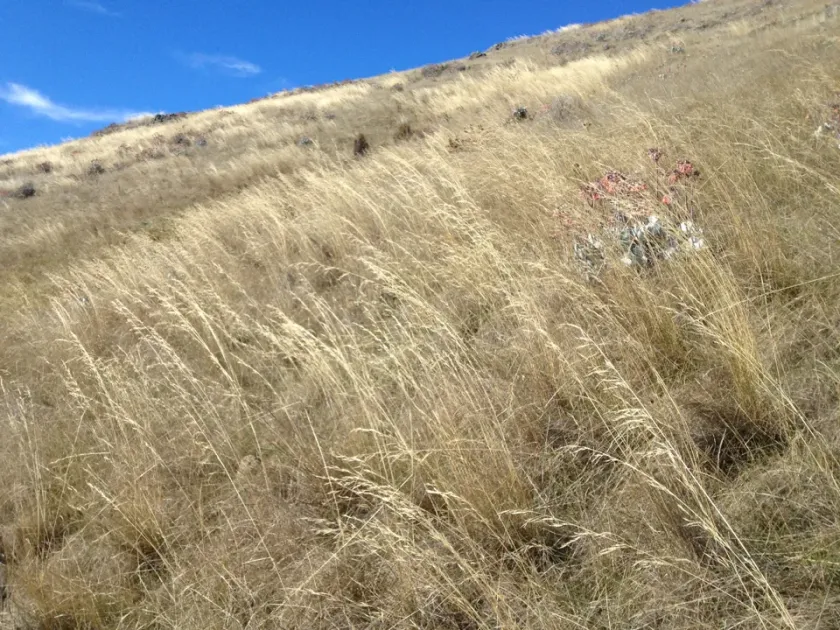
Description
Sowing dates
Austrostipa bigeniculata is a perennial grass species that typically establishes through seed dispersal. Sowing is best undertaken in the autumn, allowing the seeds to benefit from the natural cooling period and ensuring adequate soil moisture for successful germination.
Seedbed preparation requires a fine, level surface to ensure optimal seed-to-soil contact, as seeds should not be buried too deeply. Excessive soil cover can inhibit germination and reduce the uniformity of the resulting pasture stand.
The seeding rate must be calculated based on the intended use of the land, whether it is for livestock grazing or environmental rehabilitation. Correct density ensures quick establishment and effective competition against potential weed encroachment.
Young seedlings develop slowly during the initial stages, focusing primarily on root system expansion. Consequently, it is crucial to protect these areas from grazing animals and mechanical traffic until the plants have firmly established themselves.
Successful establishment is best achieved on land previously cleared of invasive weeds, ensuring that the young grass does not face intense competition for available nutrients and water during its formative period.
Growing requirements
This grass belongs to the Poaceae family and is native to the diverse landscapes of Australia. It is highly adapted to temperate climates, showing significant resilience to drought and periods of heat stress common in these regions.
Optimal growth occurs in well-drained soils, as the plant is sensitive to waterlogging. It thrives in various soil types, ranging from sandy loams to heavier textures, provided that adequate aeration is maintained within the soil profile.
Austrostipa bigeniculata shows tolerance for varying soil pH levels, making it a versatile candidate for the rehabilitation of degraded agricultural lands. It is capable of surviving wide fluctuations in daily temperatures.
Exposure to full sunlight is essential for the healthy development of this species. Shading from trees or more aggressive canopy plants will result in reduced vigour, thinner growth, and lower forage biomass production.
While the plant is adapted to nutrient-poor soils, overall performance can be improved by maintaining a balanced nutrient environment, though careful management is required to avoid favoring invasive weeds.
Yield
The primary agricultural use of this species is as a forage component in grazing systems, particularly in dryland areas. It provides a reliable source of green biomass when other, less resilient species may suffer from moisture stress.
The yield of green material is closely linked to grazing management. Adopting a rotational grazing system helps maintain the vigor of the grass, preventing overgrazing while ensuring consistent production over the growing season.
Forage quality is highest during the vegetative stage before flowering. Managers should be aware that the mature seed heads, characterized by sharp awns, can cause injury to the mouths and eyes of grazing livestock.
Beyond forage production, the species plays a vital role in soil stability. Its extensive root architecture effectively binds soil particles, serving as a primary defense against wind and water erosion in arid environments.
Maximizing yield requires a proactive approach to land management, where grazing intensity is adjusted according to the specific growth stage of the plants and current climatic conditions.
Main diseases and pests
The species is susceptible to various rust fungi, which appear as lesions on the leaves, especially during periods of high humidity. These infections can significantly reduce photosynthetic efficiency and lower overall quality.
Insect pests, such as locusts and various lepidopteran larvae, can cause substantial damage to the foliage. Monitoring during high-risk seasons is essential to prevent large-scale biomass loss.
Root-knot nematodes are known to affect this species, leading to stunted growth and yellowing of the foliage. Identifying such underground threats is complex and often requires professional soil analysis.
Weed competition remains the most significant threat, especially during the early stages of establishment. Opportunistic weed species can rapidly colonize bare spaces, stifling the growth of the Austrostipa seedlings.
Integrated pest and weed management strategies, including the use of controlled grazing to maintain pasture health, are the most effective ways to mitigate these threats and ensure the longevity of the stand.