
Flat-awned Speargrass
Austrostipa platychaeta
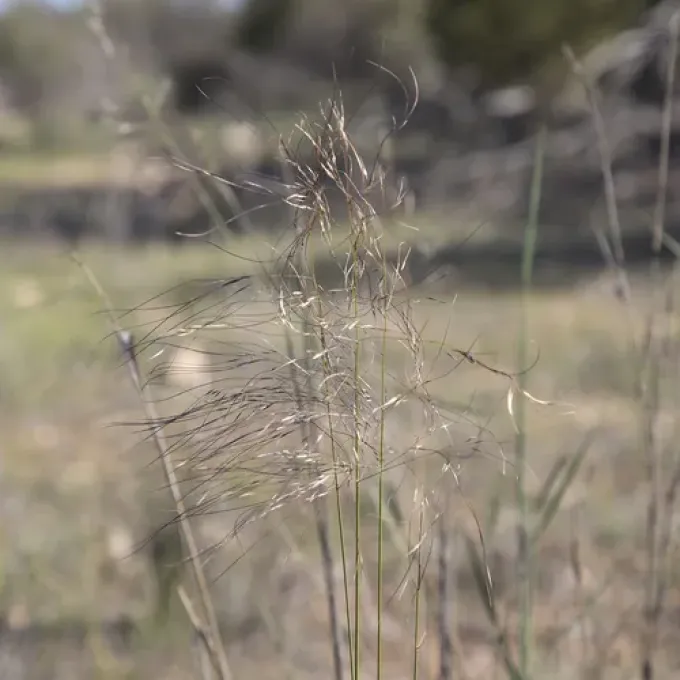
Description
Sowing dates
Austrostipa platychaeta, commonly known as Flat-awned Speargrass, is a perennial member of the Poaceae family native to arid regions. Planting is typically scheduled to coincide with the onset of the cooler season, which provides the necessary moisture for germination before the plant enters its peak growth phase during the spring.
In agricultural settings, seeds should be sown at a shallow depth to ensure that they are not buried too deeply, which could inhibit emergence. Proper soil-to-seed contact is essential for maximizing germination rates, especially in drier environments where moisture retention is critical for early development.
Growing requirements
This grass is highly specialized for semi-arid and arid climates, demonstrating superior tolerance to drought compared to many standard forage crops. It thrives in open, sunny environments and does not tolerate competition from taller vegetation or canopy shading.
Flat-awned Speargrass prefers well-drained, sandy to loamy soils. One of its key agricultural benefits is its ability to grow in saline-affected soils, providing a viable option for grazing restoration in areas where conventional crops fail due to high salt content.
Maintaining the health of the plant requires careful management of grazing pressure. As a native bunchgrass, it stores energy in its crown and root system, necessitating periods of rest between grazing cycles to ensure the long-term productivity and longevity of the stand.
Main diseases and pests
The primary threats to this species include soil pathogens, specifically those causing root rot, which typically manifest during periods of waterlogging. Ensuring adequate drainage is a fundamental step in the management of this crop to mitigate the risk of fungal infections.
Pests, particularly locust outbreaks, pose a significant risk to the succulent vegetative growth of the grass. Additionally, overgrazing by livestock is a major management concern that can lead to thinning stands and the encroachment of invasive weed species that outcompete the native bunchgrass.