
Calico flower
Aristolochia elegans Mast.
Description
Sowing dates
The propagation of Aristolochia elegans is primarily achieved through seeds sown in late winter or early spring. Use a high-quality seed-starting mix and ensure the soil remains consistently warm, ideally between 20–25 degrees Celsius, to facilitate germination.
Seeds should be lightly covered with substrate and kept in a moist environment. Using a propagator or covering the seed tray with plastic can help maintain the necessary humidity for successful seedling development.
Once the seedlings develop two or three pairs of true leaves, they can be transplanted into individual pots. This stage requires careful handling to prevent damage to the delicate root system, which is vital for the plant's future growth.
Outdoor planting should be scheduled only after the risk of frost has completely passed. Acclimatizing the plants to outdoor conditions over the course of a week is a recommended practice to avoid transplant shock.
Stem cuttings represent an effective alternative for vegetative propagation. Take semi-hardwood cuttings during the summer months, treat them with a rooting hormone, and place them in a humid, well-lit environment until rooted.
Growing requirements
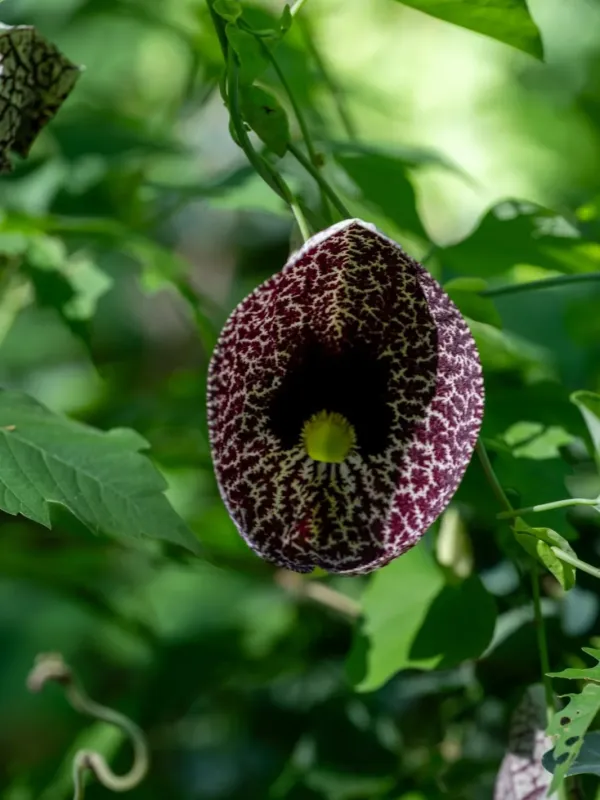
Aristolochia elegans, a member of the Aristolochiaceae family, is a vigorous climber originating from the tropical regions of South America. It is widely grown for its spectacular, pipe-shaped flowers that feature distinctive purple-brown veining.
The plant thrives in fertile, well-drained soil rich in organic matter. A neutral or slightly acidic soil pH is preferred for optimal nutrient absorption and vigorous vine development during the growing season.
Vertical support is essential for this species. Providing a sturdy trellis, fence, or arbor allows the plant to climb effectively and display its ornamental foliage to its best advantage in landscape design.
While the calico flower enjoys full sun exposure, it performs exceptionally well in partial shade, especially in hotter climates where mid-day sun could scorch the leaves. Consistent light is crucial for flower production.
Regular watering is necessary to maintain soil moisture, but it is important to avoid waterlogging. During the summer, monthly application of balanced fertilizers will support the rapid growth of stems and foliage.
Main diseases and pests
Aristolochia elegans is relatively robust, but it can be susceptible to fungal issues if provided with poor drainage or insufficient air circulation. Root rot is a common danger in overly wet or heavy soils.
Pests like aphids can occasionally infest the growing tips of the vine, weakening the plant. Monitoring for these small insects and applying insecticidal soap can manage infestations before they spread significantly.
Spider mites are another potential threat, particularly in hot and dry environments. They tend to congregate on the undersides of leaves, causing yellowing and a loss of vitality if left untreated.
Maintenance of plant health through proper spacing and good hygiene practices is the best prevention against both pests and pathogens. Clean tools and regular inspections ensure a thriving vertical garden.
If chemical intervention is necessary, opt for systemic pesticides that target specific pests. Always follow the manufacturer's instructions to ensure the safety of surrounding beneficial insects and the environment.