
Archidendron bigeminum
Archidendron bigeminum
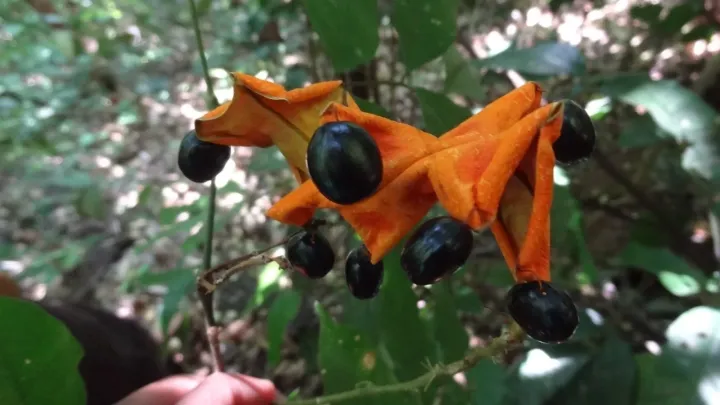
Description
Sowing dates
Archidendron bigeminum belongs to the Fabaceae family and is typically propagated via seeds, which require specific preparation to ensure uniform germination.
Sowing should be performed in a well-drained, nutrient-rich potting medium while maintaining a constant temperature range between 22 and 25 degrees Celsius.
In nursery settings, seedlings are raised in containers until they reach a height of 30–50 cm to ensure a robust root system before field transplantation.
The optimal time for establishing a new plantation aligns with the onset of the rainy season, which provides the necessary hydration for young plants to establish.
When cultivated outside its native tropical range, seedlings require an acclimatization phase in controlled greenhouse environments to tolerate potential humidity variations.
Growing requirements
This tree species originates from moist tropical forest ecosystems and thrives best in regions with high average humidity and consistent annual precipitation.
Successful growth requires fertile, loam-based soils with a neutral to slightly acidic pH, which must possess excellent internal drainage properties to avoid waterlogging.
While the species is light-demanding, young saplings benefit from partial shade, mirroring the light conditions found under the canopy of a mature forest.
Temperature stability is critical, as Archidendron bigeminum is highly sensitive to frost and cannot survive in environments where temperatures drop significantly.
Consistent irrigation is vital during the early years of development, as the species does not possess strong drought tolerance and may stunt if water-stressed.
Yield
The economic value of this crop is primarily derived from its timber production and the potential harvesting of botanical compounds found in its pods and bark.
Productivity is largely determined by plantation density; intensive management allows for high-yield spacing, typically supporting 400 to 600 trees per hectare.
Harvesting pods is performed manually to maintain the quality of the seeds and prevent mechanical damage to the branches of the fruit-bearing trees.
The timber produced by this species has a moderate density, making it suitable for woodworking, interior cabinetry, and the production of artisanal furniture.
As a member of the legume family, this species contributes to soil health through nitrogen fixation, offering long-term benefits to agroforestry systems.
Main diseases and pests
The primary threats to these plantations include root-rot fungal infections, which are often triggered by excessive soil moisture and poor drainage management.
Leaf tissue can be vulnerable to various tropical defoliators and pests that flourish in the warm, humid conditions favored by the tree species itself.
Maintaining adequate spacing between trees is essential to prevent the rapid transmission of pathogens and pests throughout the plantation area.
Improper fertilization, particularly excessive nitrogen application, can lead to succulent growth that inadvertently attracts sap-sucking insects.
- Regular phytosanitary inspections of leaves and stems.
- Implementing pruning techniques to improve airflow within the tree crown.
- Applying bio-based pest control methods as a first line of defense.
Harvesting
Harvesting for seed production occurs when pods darken and begin to dehisce naturally on the tree, signaling that the seeds have reached physiological maturity.
Operations must be conducted during dry weather to prevent moisture buildup on the harvested material, which would otherwise encourage fungal growth during storage.
Once collected, seeds are cleaned of extraneous plant matter and graded based on size and viability to ensure high-quality batches for planting or research.
Timber harvesting is managed through selective logging of mature trees, ensuring that the surrounding ecosystem remains intact and continues to thrive.
Proper seed storage requires cool, dark, and dry conditions to prevent the oxidation of essential oils, which can significantly decrease long-term seed viability.