
Orange aphelandra
Aphelandra aurantiaca
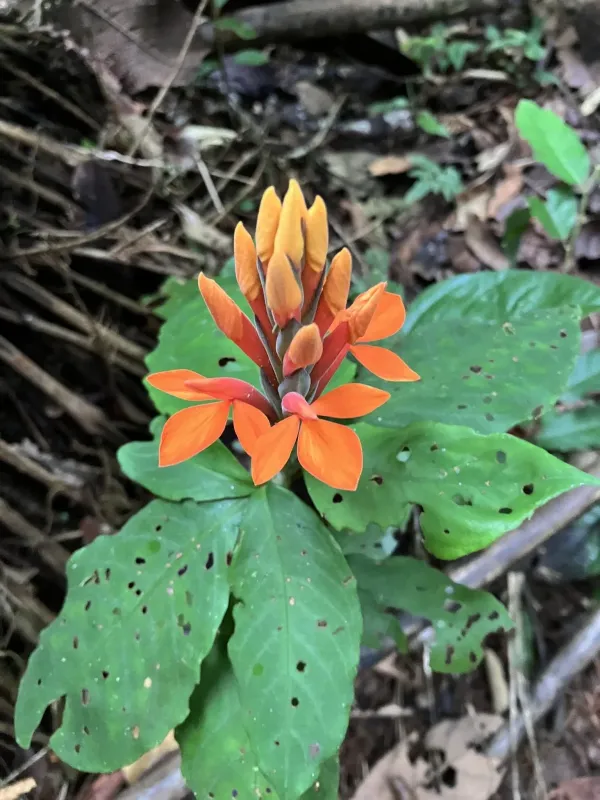
Description
Growing requirements
Aphelandra aurantiaca, commonly known as orange aphelandra, belongs to the Acanthaceae family and originates from the tropical rainforests of Central and South America.
This evergreen shrub is characterized by its large, glossy, dark green leaves with prominent veins and its spectacular, four-sided, orange-bracted flower spikes.
The plant thrives in warm environments with temperatures consistently between 20 and 25 degrees Celsius, as it is highly sensitive to cold drafts and sudden temperature fluctuations.
For optimal growth, it requires bright, filtered light and high humidity levels, ideally maintained through regular misting or placement on a tray with damp pebbles.
The soil substrate must be well-drained, nutrient-rich, and slightly acidic to neutral, allowing for sufficient air circulation around the roots while maintaining consistent moisture.
Main diseases and pests
Common pests that plague Aphelandra aurantiaca include spider mites, mealybugs, and scale insects, which often thrive in dry indoor air conditions.
Overwatering is a primary cultural hazard that frequently leads to root rot and fungal infections, causing the leaves to droop, turn yellow, and drop prematurely.
Powdery mildew can occur in environments with poor air ventilation, appearing as a white powdery substance on the foliage and significantly reducing the plant's aesthetic value.
Effective pest management involves regular leaf inspection and the use of insecticidal soaps or systemic pesticides whenever an infestation is detected at an early stage.
Providing a balanced fertilization schedule and avoiding water accumulation in the crown of the plant are critical strategies for maintaining vigorous growth and disease resistance.