

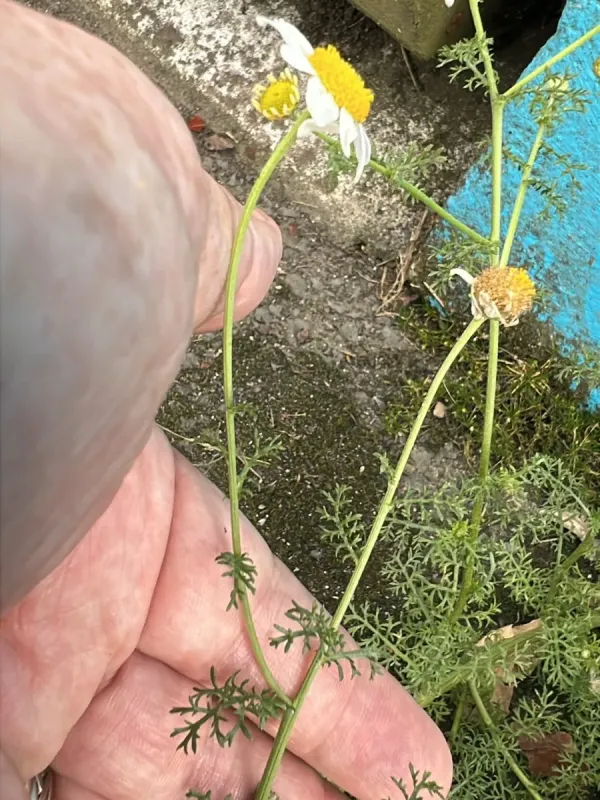
Description
Growing requirements
Stinking chamomile (Anthemis cotula) is an annual herb belonging to the Asteraceae family. Originating from Europe and parts of Western Asia, it has successfully spread across various continents, becoming a common agricultural weed.
The plant thrives in nutrient-rich, moist soils. It is frequently found in arable fields, pastures, and disturbed sites. Its rapid growth and high seed production make it a significant competitor in agricultural systems.
Botanically, it features finely divided, feathery leaves and daisy-like flowers with white ray florets and yellow disk florets. It emits a pungent, acrid odor when crushed, distinguishing it from other chamomile species.
It is well-adapted to different climates, showing high resilience in areas with moderate rainfall. The root system is relatively shallow but highly efficient at absorbing moisture and nutrients from the upper soil horizons.
In farming, this species is considered a nuisance due to its competitive nature. It can crowd out young crop seedlings, reduce light availability, and deplete soil moisture, leading to measurable losses in overall yield.
Main diseases and pests
Stinking chamomile serves as a host for various agricultural pests, particularly aphids. These insects can migrate from the weed to adjacent commercial crops, vectoring viruses and reducing overall plant vigor.
The plant is associated with several fungal pathogens that affect crop productivity, including powdery mildew and root rot species. Dense populations of this weed create a localized microclimate conducive to pathogen development.
The acrid juice of the plant can be an irritant to livestock. While most animals avoid grazing on it, contamination of hay or forage with dried chamomile can negatively affect animal health and feeding behavior.
Effective management strategies include crop rotation, which breaks the life cycle of the weed, and proper soil tillage. Early mechanical removal is essential to prevent the plant from establishing a deep root system.
Chemical control with selective herbicides remains a standard practice. Application should be timed before the bolting stage to maximize efficacy and minimize the risk of developing resistance within the weed population.
Reference
Connections · Stinking chamomile
Most often together:
Marketplace
