
St. John's chamomile
Anthemis sancti-johannis Stoj. et al.
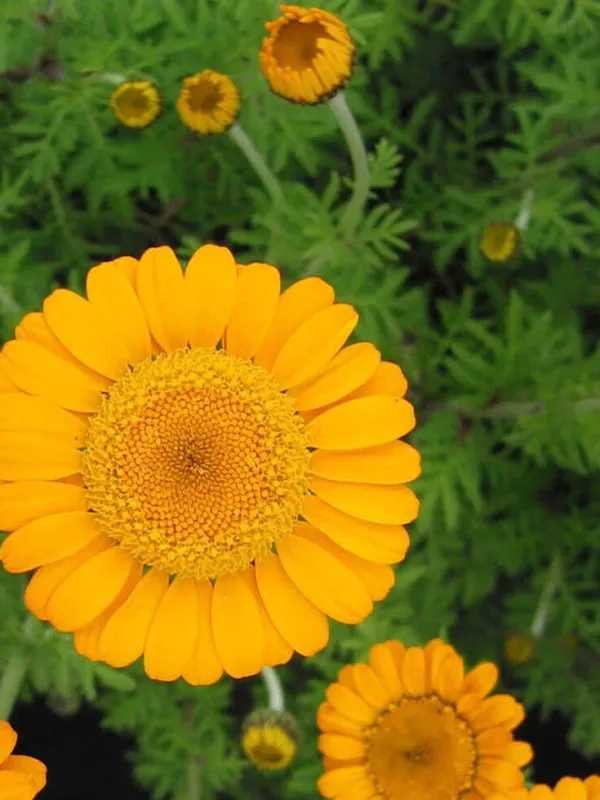
Description
Sowing dates
Sowing seeds of St. John's chamomile is best performed in early spring when the soil temperature consistently reaches 10 to 12 degrees Celsius.
Direct field seeding is optimal in April or early May, as this allows the seedlings to establish themselves before the onset of the hot summer season.
Fall sowing is also a viable option, as it subjects the seeds to natural stratification, leading to improved germination rates during the following spring.
For greenhouse cultivation, seeds should be sown in March into a light, well-draining potting mix to ensure healthy development of the root system.
Spacing between rows should be maintained at 30 to 40 centimeters to ensure sufficient air circulation and to facilitate maintenance work during the season.
Growing requirements
St. John's chamomile is a perennial herbaceous member of the Asteraceae family that thrives in areas with full, unobstructed sunlight exposure.
The plant requires light, sandy, or loamy soil types and is highly sensitive to waterlogging, necessitating excellent soil drainage for success.
It is characterized by significant drought tolerance, allowing it to perform well in rocky or nutrient-poor soils where other crops might fail.
Moderate temperatures are ideal during the primary vegetative growth phase, though the plant is remarkably hardy during intense summer heat.
Soil pH should ideally be neutral or slightly alkaline, as these conditions support the metabolic processes essential for essential oil production.
Yield
The yield of St. John's chamomile depends heavily on solar radiation levels, as the plant concentrates its essential oils primarily during sunny weather.
Harvesting the flower heads during peak bloom ensures that the concentration of active chemical compounds remains high for medicinal or commercial use.
With proper crop management, a single planting can remain productive for several years, providing consistent annual yields for the grower.
The efficiency of production is bolstered by the perennial nature of the species, reducing the need for constant soil preparation and reseeding.
Proper drying protocols are essential for maintaining yield quality, preventing moisture-related degradation, and preserving the plant's aromatic properties.
Main diseases and pests
The primary threats to this culture are fungal diseases, particularly root rot, which typically occur in poorly drained or over-irrigated soil conditions.
Common pests like aphids and spider mites can infest the foliage during dry spells, which may impact the plant's overall health and vigor.
Weed management is vital during the early stages of growth, as the plant is not highly competitive against invasive weeds while establishing its roots.
Powdery mildew can become a concern in high-humidity environments with poor airflow, necessitating strict adherence to recommended planting densities.
Biological and integrated pest management practices are recommended to maintain the plant's health without relying on excessive chemical inputs.
Harvesting
Harvesting should be done manually or using mechanical headers during dry days, preferably when the flowers are fully open and free of morning dew.
Care must be taken to harvest only the flower heads to ensure that the active ingredients are collected in their most potent state.
Post-harvest handling requires immediate transfer to a drying facility to prevent self-heating and loss of color or volatile compounds in the crop.
Drying should be performed in thin layers in a shaded, well-ventilated space to ensure the preservation of the plant's chemical profile.
Final storage should be in cool, dry, and dark conditions to prevent oxidation and to protect the high-value essential oil content.