
Austrian chamomile
Anthemis austriaca Jacq.
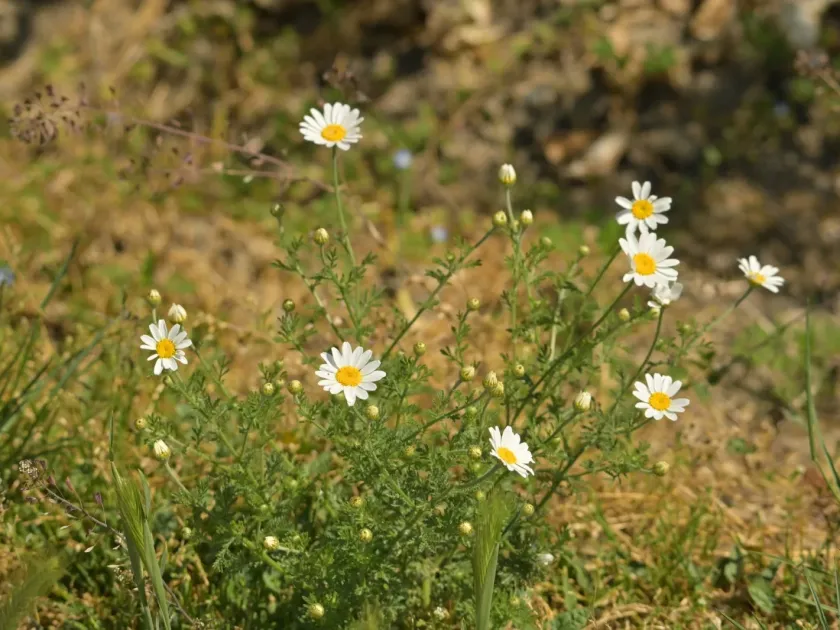
Description
Growing requirements
Austrian chamomile (Anthemis austriaca Jacq.) is a member of the Asteraceae family. It is typically regarded as a troublesome annual or biennial weed in agricultural settings, known for invading grain fields and competing for vital resources such as sunlight and nutrients.
The plant originates from Central and Southern Europe but has expanded its range across various temperate regions. It thrives in open, disturbed environments, often becoming a dominant species in fields, roadsides, and fallow lands where vegetation density is low.
Botanically, it displays a branched stem that can reach heights of 60 cm. The leaves are pinnatisect, providing high photosynthetic efficiency. Its inflorescence is a typical composite head with white ray florets and yellow disk florets, which are highly attractive to various pollinators.
Austrian chamomile is adaptable to a wide range of soil types, though it prefers well-drained, lime-rich soils. Its ability to tolerate dry conditions makes it particularly persistent in arid farming regions, where it often outcompetes staple crops for soil moisture.
In terms of agricultural impact, the plant is considered a significant nuisance. It reduces crop yields by occupying space and consuming resources meant for cultivation, necessitating integrated management strategies to maintain high production quality.
Main diseases and pests
The species serves as an alternate host for several plant pathogens. Fungal diseases such as powdery mildew and various rusts can readily spread from populations of Austrian chamomile to cereal crops, increasing the overall disease pressure.
Pests that inhabit this plant are diverse, ranging from leaf-feeding insects to sap-sucking species. These pests can cause direct damage to the weeds but may also act as vectors for viruses that target agricultural plants.
Cultural control methods involve strict crop rotation and the use of competitive cover crops. These practices suppress weed germination by shading the soil surface and utilizing available nitrogen, leaving little for the opportunistic Austrian chamomile.
Chemical control is often necessary in intensive farming. Selective herbicides applied during the early rosette stage of the weed provide the most effective control without damaging the primary crop species.
Mechanical cultivation remains an essential tool for management, especially in organic or reduced-chemical systems. Regular weeding during the early stages of growth is crucial to prevent the plant from reaching the flowering and seed-setting stage.