
Anthemis tinctoria
Anthemis tinctoria L.
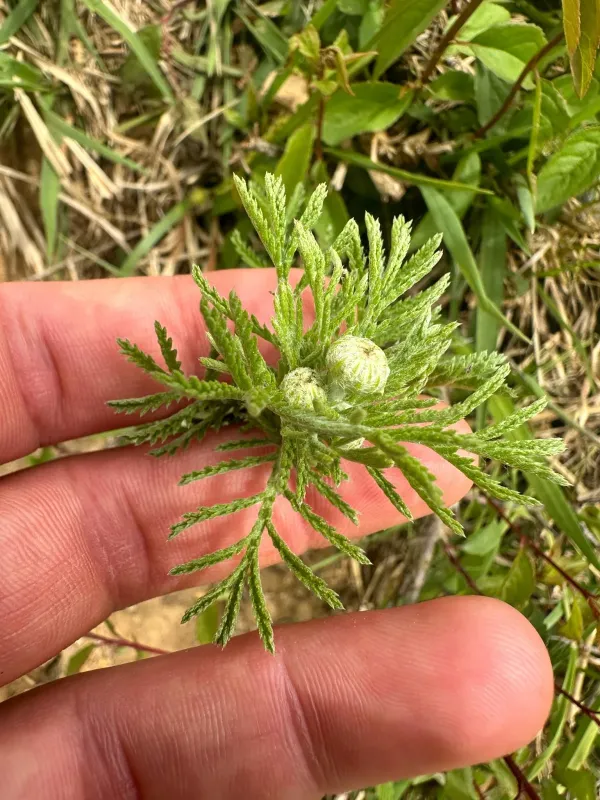
Description
Sowing dates
Anthemis tinctoria L., commonly known as golden marguerite or dyer's chamomile, belongs to the Asteraceae family and is recognized for its historical use in the dye industry.
The plant is typically cultivated as a short-lived perennial, with seeds sown either in late autumn or early spring to ensure optimal germination rates.
Seeds are tiny and require a well-prepared, fine-textured seedbed to achieve proper depth, which should be maintained at roughly 1 to 2 centimeters.
Direct drilling is the preferred method for large-scale production, allowing for uniform spacing and consistent plant density across the field.
Seedlings emerge relatively quickly under favorable soil temperatures, immediately establishing a basal rosette that remains throughout the vegetative phase.
Growing requirements
This crop is highly prized for its adaptability, thriving in well-drained, sandy, or stony soils that are often unsuitable for other commercial crops.
It prefers full sun exposure to maximize the production of secondary metabolites and floral biomass, which are critical for its industrial applications.
The species is remarkably drought-tolerant, capable of surviving long periods of water stress without showing significant decline in its overall health.
Soil pH ranging from slightly acidic to slightly alkaline is perfectly acceptable, making it a versatile plant for various climatic zones and soil types.
Effective management includes regular inter-row cultivation during the first months of growth to keep weed competition to a minimum.
Yield
The economic value is primarily derived from the flower heads, which are rich in flavone pigments used for dyeing textiles in various shades of yellow.
Commercial yields of dry flower heads range from 500 kg to 1,000 kg per hectare, depending heavily on the soil fertility and crop management practices.
Secondary outputs include essential oils extracted from the biomass, which are utilized in the cosmetic and fragrance industries for their unique aromatic profile.
Second-year crops typically show the highest productivity, featuring a higher number of flowering stems and larger, more vibrant flower heads.
Strategic applications of phosphorus-rich fertilizers during the budding stage are proven to increase pigment concentration and overall biomass yield.
Main diseases and pests
Anthemis tinctoria possesses strong natural resistance to many common agricultural diseases, partly due to the high content of essential oils in its tissues.
However, under conditions of excessive humidity, plants may be susceptible to powdery mildew, which can affect the leaves and reduce photosynthetic efficiency.
Root rot is rarely an issue unless the field suffers from poor drainage or persistent waterlogging during the cooler months of the season.
Pests like aphids may target the young buds during the growth phase, potentially damaging the reproductive organs and lowering the quality of the raw material.
Integrated pest management, including regular field monitoring and the use of botanical insecticides, remains the standard for maintaining crop health.
Harvesting
Harvesting should be timed precisely during the peak flowering stage when the concentration of natural dyes within the petals is at its absolute maximum.
Mechanical harvesting is generally utilized for industrial production, using specialized equipment to gather the flowers while leaving the stems in the field.
The harvested flowers must be transported promptly to drying facilities to prevent heat buildup and the oxidation of sensitive pigment compounds.
Controlled drying is essential, with temperatures maintained below 45 degrees Celsius to preserve the structural integrity and chemical composition of the blossoms.
Final storage involves placing the dried product in moisture-proof, dark containers to ensure long-term stability and color quality for commercial trade.