
Mexican flowering fern
Anemia mexicana
Description
Growing requirements
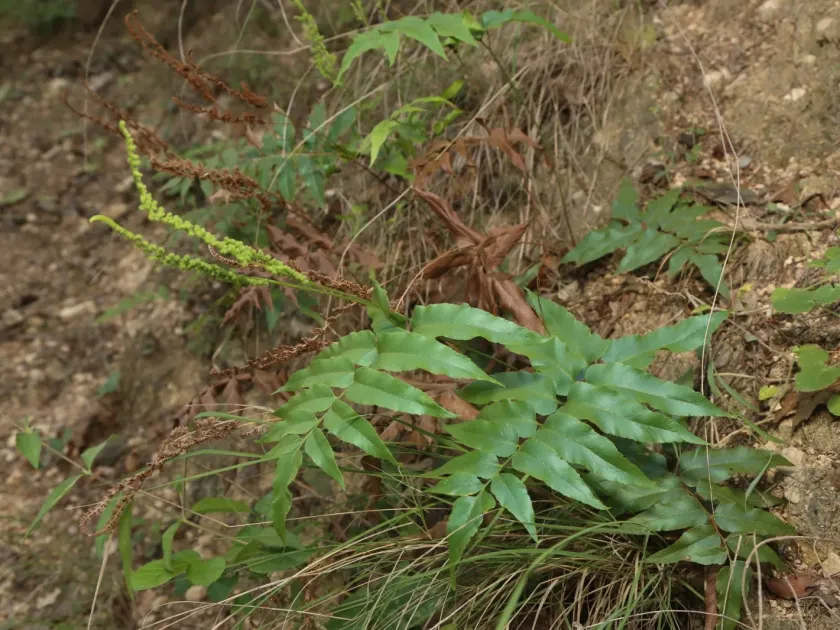
The Mexican flowering fern (Anemia mexicana) is a distinctive perennial fern species belonging to the family Anemiaceae. Unlike typical ferns, this plant is characterized by its unique fertile fronds, which bear sporangia on specialized elongated stalks that rise above the sterile leaf blades.
Native to the regions of Mexico and parts of Texas, USA, this species has evolved to grow in rocky crevices and limestone cliffs. This evolutionary adaptation makes it a calcicole plant, meaning it thrives in soils with a significant mineral content and specific drainage properties that prevent root rot.
For cultivation, the plant requires a controlled environment with temperatures ranging from 18 to 24 degrees Celsius. It is highly sensitive to arid environments; therefore, maintaining a moderate to high ambient humidity is crucial for the health and aesthetic quality of its fronds throughout the growth season.
The potting medium must be porous and inorganic-heavy to mimic the natural rocky habitat. A mix of sand, perlite, and crushed limestone is highly recommended to ensure proper water flow and prevent the root system from suffocating in heavy, water-logged peat-based soils.
While primarily used as a botanical curiosity in specialized fern collections, this plant offers significant ornamental value for rock gardens in appropriate climates or controlled indoor environments. It is not an agricultural commodity, but it remains a prized specimen for enthusiasts of unique pteridophytes.
Main diseases and pests
Root rot caused by excessive soil moisture is the primary threat to Anemia mexicana. Growers must ensure that the growing medium is never fully saturated for long periods, as the delicate rhizomes are susceptible to pathogenic fungi when exposed to low-oxygen environments in the substrate.
Pest pressures primarily include spider mites and scale insects, which frequently attack the foliage in indoor settings with low air circulation. Integrated pest management, focusing on maintaining healthy humidity levels and physical removal of insects, is the preferred method for managing infestations in such a sensitive species.