
Khaki weed
Alternanthera pungens Kunth
Description
Growing requirements
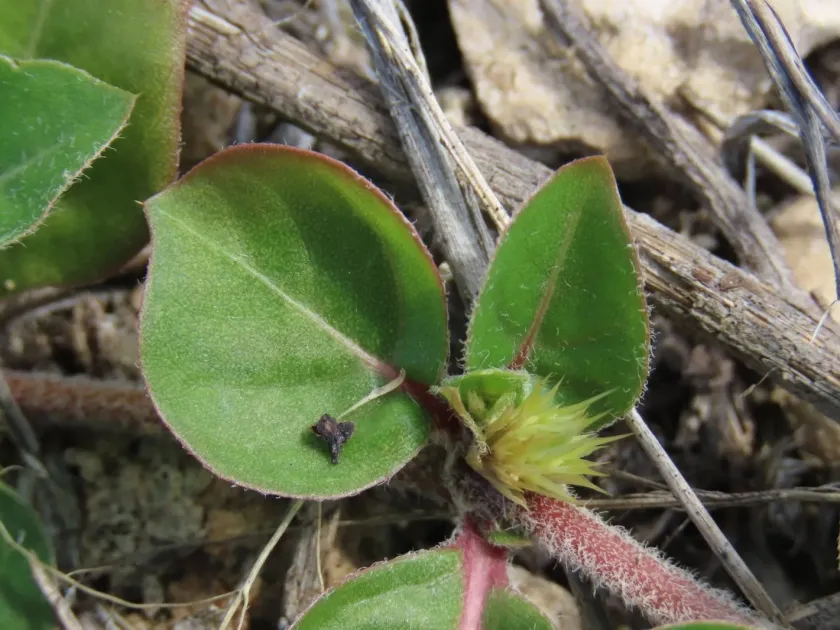
Khaki weed (Alternanthera pungens Kunth) is a mat-forming perennial herb belonging to the Amaranthaceae family. It is recognized by its prostrate stems and small, opposite, elliptical leaves that grow along the ground.
The plant originates from tropical South America but has become a major invasive species across many continents. It thrives in disturbed areas such as roadsides, grazing lands, and neglected agricultural fields.
The botanical structure of the plant includes sharp, spine-like bracts surrounding the flowers. These spines are the plant's signature feature, designed to adhere to clothing, fur, and tires, facilitating rapid seed dispersal.
Ecologically, the plant is highly adapted to drought and poor, sandy soils. It requires full sunlight to establish its mats, and it can outcompete native or planted crops by monopolizing surface space and soil nutrients.
Agricultural management requires vigilance. The plant's ability to propagate from both seeds and fragmented stems makes manual weeding difficult, as even small pieces of the root system can regenerate if left in the soil.
Main diseases and pests
The primary threat posed by Khaki weed is its impact on livestock and human activity. The sharp spines can pierce the hooves of sheep and cattle, leading to infections and reduced livestock productivity.
There are very few natural pests or diseases that significantly suppress this weed in its invasive range. This biological resilience allows it to become dominant in pastures where it is not actively managed.
Control strategies often involve a combination of chemical herbicide application and rigorous mechanical removal. It is crucial to treat infestations before the plant produces its characteristic prickly seed heads.
Prevention is the best form of management. Ensuring that farm machinery is cleaned before moving between fields is essential to stop the spread of seeds that are easily trapped in mud and debris.
Despite some historical medicinal uses in its native range, in an agricultural context, it is considered a significant weed. It provides no economic value to farmers and requires persistent effort to eradicate from productive land.