
Alligator weed
Alternanthera philoxeroides (Mart.) Griseb.
Description
Growing requirements
Alternanthera philoxeroides, commonly known as alligator weed, is a perennial herb belonging to the Amaranthaceae family. It is recognized globally as a serious invasive species due to its aggressive growth patterns in both aquatic and terrestrial environments.
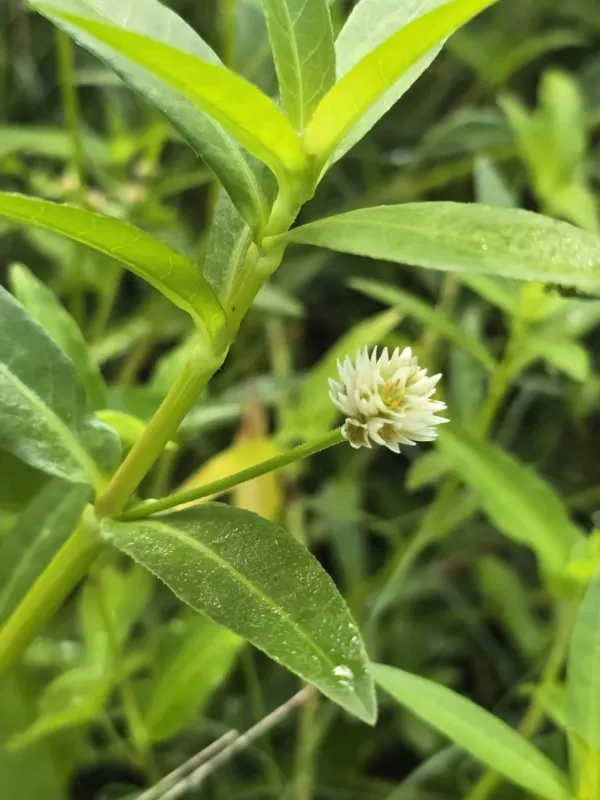
Originating from South America, the plant has successfully adapted to diverse climates. Its morphology includes hollow stems that allow it to float in water or sprawl across soil, along with opposite leaves and small white globular inflorescences.
The plant thrives in warm, humid conditions and prefers nitrogen-rich environments. It is highly resilient, capable of surviving in various soil types, from sandy to clay-heavy, provided that moisture levels remain relatively high throughout the growing season.
Agronomic management is challenging because the plant reproduces primarily through vegetative fragmentation. Any part of the stem containing a node can initiate a new plant, making traditional mechanical cultivation methods largely ineffective.
While some regions utilize it as fodder, its detrimental impact on irrigation systems, navigation, and native biodiversity generally outweighs its agricultural utility, leading to strict regulations against its cultivation.
Main diseases and pests
Biological control remains the most effective management strategy. The flea beetle Agasicles hygrophila has been successfully introduced in many countries to target the foliage, effectively reducing the density of large infestations.
Diseases affecting this species are primarily fungal. While these pathogens can damage the plant, they rarely eradicate it entirely, as the weed's vigorous regeneration capacity often compensates for local tissue necrosis.
Various insects, including certain stem-boring moths, can act as natural checks. However, their efficiency depends heavily on the presence of high host density and suitable environmental conditions for their survival.
Management programs emphasize the importance of early detection and rapid response. Once established in a waterway, the removal process requires integrated approaches combining biological agents with selective herbicides.
Chemical control must be executed carefully to minimize the impact on non-target species. Continuous monitoring is essential to ensure that fragmented stems are not transported to uninfested fields via farm machinery or water flow.