
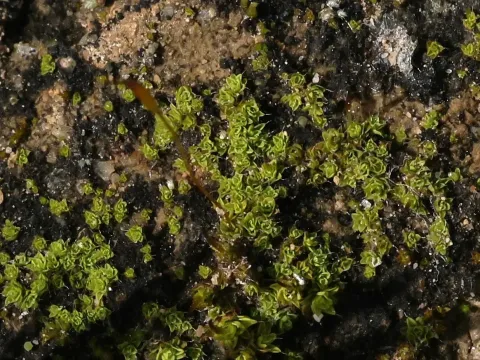
Aloina
Aloina
Aloina is a genus of mosses within the Pottiaceae family, known for its ability to thrive in harsh, arid environments. While not an agricultural crop, it serves as a vital component of biological soil crusts, which are essential for maintaining soil stability in fragile ecosystems.
What the section contains

Aloina
Botanically, these mosses are characterized by their small size and succulent-like leaf structures. The leaves often have incurved margins, an evolutionary adaptation that helps the plant conserve moisture and survive extended periods of drought by minimizing surface area exposure.
The distribution of Aloina spans across arid and semi-arid regions globally. They are typically found in exposed, sunny habitats, including deserts, steppes, and rocky outcrops, often colonizing mineral-rich soils that have high levels of calcium or gypsum.
Regarding climatic requirements, Aloina is highly resilient to temperature extremes. It enters a state of dormancy during severe drought and quickly reactivates its physiological processes upon rehydration, making it a master of survival in nutrient-poor environments.
Soil quality is paramount for this genus, as it prefers well-drained, mineral-based substrates. It is particularly sensitive to soil chemistry and acts as an ecological indicator for specific geological or soil characteristics in the areas where it is found.
The most significant threat to Aloina populations is physical disturbance of the soil crust. Activities such as livestock grazing and off-road vehicle traffic can destroy the thin layer of moss, leading to rapid soil erosion and loss of habitat.
Chemical fertilizers and herbicide runoff pose a substantial risk to these organisms. Being adapted to low-nutrient environments, Aloina cannot compete with faster-growing invasive grasses that thrive when soils are artificially enriched with nitrogen.
Climate change and the resulting unpredictability in rainfall patterns pose a major threat. Although these mosses are drought-tolerant, prolonged and unprecedented dry spells can exceed their physiological limits, leading to population decline.
Fungal pathogens can affect Aloina colonies, especially in environments with poor air circulation or excessive moisture. While they are not susceptible to traditional crop pests, environmental pathogens remain a factor in their overall health.
Habitat fragmentation due to urban development and industrial agriculture also limits the dispersal capabilities of these mosses. As the landscape becomes more industrialized, the specific niches required by Aloina become increasingly rare and disconnected.