
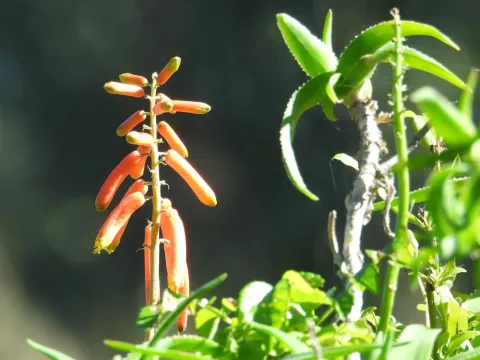
Aloiampelos
Aloiampelos
Aloiampelos is a genus of succulent plants within the Asphodelaceae family, formerly recognized as a subgroup of the Aloe genus. These plants are native to Southern Africa, characterized by their unique adaptation to arid and rocky environments.
What the section contains


Aloiampelos
Botanically, many Aloiampelos species are distinct due to their scandent or climbing habit, often using surrounding vegetation as support. Their succulent leaves are typically arranged in a rosette or along the stem, storing water to survive prolonged droughts.
The culture thrives in well-draining, rocky soils. In an agricultural or horticultural setting, the substrate must be highly porous to ensure that water does not accumulate around the roots, as root rot is the most common cause of plant failure.
Requirements for climate include high levels of solar radiation. These plants are heliophilic and require significant exposure to light to maintain their structural integrity and typical pigmentation, preventing the "stretching" or etiolation of the stems.
Proper cultivation management involves a cycle of watering that mimics the natural rainfall of their native habitat. This means allowing the soil to dry out completely between waterings, particularly during the dormant winter months when growth slows down significantly.
The primary threats to Aloiampelos are related to fungal pathogens triggered by poor air circulation and excessive moisture. Excess water creates an anaerobic environment in the soil, which leads to the rapid decay of the delicate root system.
Mealybugs are the most common pests encountered. These insects hide in the tight junctions between leaves and stems, sucking the sap and causing the plant to weaken and become prone to secondary bacterial infections that spread through the foliage.
Spider mites can also be problematic, especially in environments with low humidity. They pierce the epidermis of the leaves, resulting in unsightly discolored patches and, if left unchecked, the eventual senescence and loss of the leaf segment.
Scale insects are another potential pest, appearing as small, brown, bump-like structures on the stem or leaves. They are difficult to treat with topical sprays and often require manual removal followed by the application of systemic pesticides.
Prevention remains the most effective strategy for managing threats. This includes maintaining dry, well-ventilated conditions and isolating new plant specimens to ensure they are free from pests before introducing them into an established collection.