
Aloiampelos tenuior
Aloiampelos tenuior
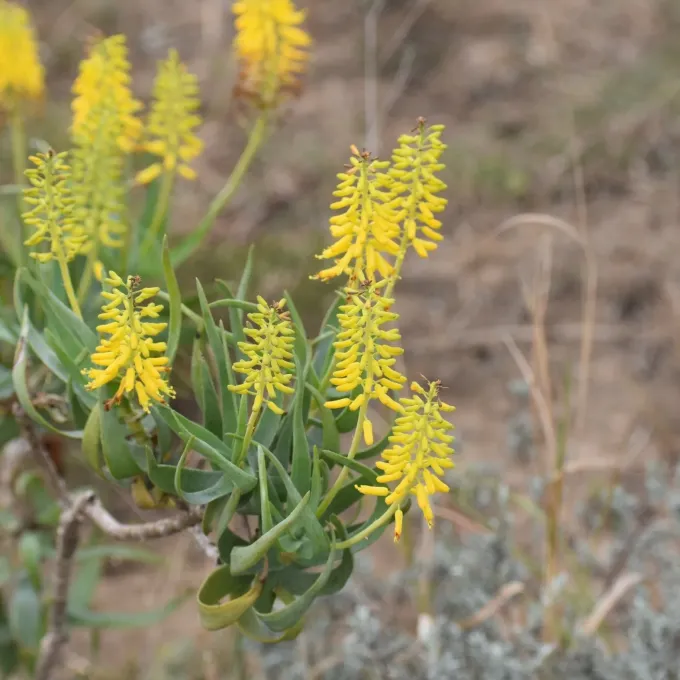
Description
Sowing dates
Propagation of Aloiampelos tenuior is most commonly achieved through vegetative means, specifically by using cuttings, which allows for the rapid acquisition of viable planting material. The optimal time for taking cuttings is during the plant's active growth phase, typically late spring or early summer.
Cut stems require a preliminary drying period of several days in a cool, dry location to form a protective callus at the wound site. This prevents tissue rot upon contact with moist growing media.
Planting is performed in a well-drained soil mix designed for succulents, supplemented with coarse sand or perlite. It is essential to maintain moderate soil moisture until the cuttings have successfully developed a root system.
Seed propagation is possible, though it is a significantly more labor-intensive and lengthy process. Seeds should be sown in a light, loose substrate, ensuring stable temperatures and diffused light to facilitate germination.
Following successful rooting, young plants should be gradually adapted to more intense sunlight and the watering regimen characteristic of mature specimens of this species.
Growing requirements
Aloiampelos tenuior belongs to the Asphodelaceae family and is native to South Africa, where it thrives in open, sun-drenched locations. The plant possesses significant drought tolerance and is capable of storing moisture within its succulent leaves.
For optimal development, this crop requires direct sunlight for at least 6–8 hours daily. Under low-light conditions, the stems tend to become etiolated, losing their natural structural integrity and aesthetic appeal.
Soil requirements necessitate excellent drainage, as water stagnation is a critical factor leading to the collapse of the root system. The medium should be aerated, with a slightly acidic to neutral pH level.
The temperature range for this species should be moderately warm during the summer months. The plant is not frost-tolerant, therefore, if temperatures drop below freezing, it must be provided with winter protection or brought indoors.
Irrigation should be regular but handled with extreme caution during the active growing season. During the winter dormancy period, watering must be minimized to allow for only slight moisture in the root ball, preventing the roots from drying out completely.
Main diseases and pests
The primary threats to Aloiampelos tenuior are associated with improper moisture management, which most frequently leads to root rot. Fungal pathogens develop rapidly in conditions of stagnant water in trays and poor air ventilation.
Among pests, mealybugs pose the greatest danger, as they target leaf axils and stems. These insects extract sap from the plant, leading to stunted growth, deformation, and overall physiological weakening.
Scale insects may also colonize the plant, creating characteristic plaques on the leaves that interfere with photosynthesis. Upon detecting these pests, immediate mechanical removal and treatment with systemic insecticides are required.
Spider mites can appear in indoor environments where the air is excessively dry. Their presence is indicated by fine webbing between stems and the appearance of yellowish spots on the foliage.
To prevent the spread of diseases and pests, it is crucial to maintain adequate spacing between plants to ensure good air circulation and to avoid overwatering the substrate.