
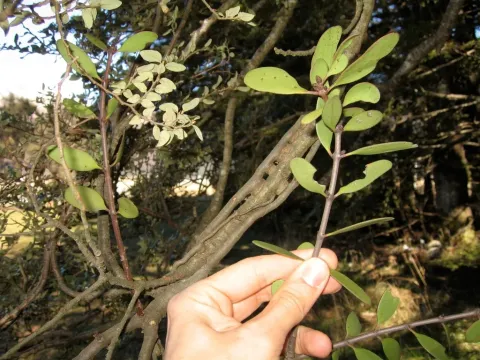
Alepis
Alepis
Alepis is a genus of evergreen hemiparasitic shrubs belonging to the Loranthaceae family. Unlike conventional agricultural crops, these plants function as aerial parasites, attaching themselves to host trees to derive water and essential mineral nutrients through specialized structures.
What the section contains

Alepis
The genus is endemic to New Zealand, where it occupies specific ecological niches within native forest ecosystems. Its survival is strictly tied to the presence of compatible host tree species, which provide both structural support and chemical resources for the plant's development.
Botanically, Alepis features leathery foliage and vibrant flowers designed for avian pollination. Its primary adaptation is the haustorium, an organ that penetrates the host’s vascular system, allowing the plant to thrive in an epiphytic environment high above the forest floor.
Requirements for growth include stable, humid climate conditions and the presence of established host populations. The plant is highly sensitive to habitat fragmentation and environmental shifts, reflecting its specialized role within the temperate rainforests of its native range.
In terms of human use, Alepis is not cultivated for agricultural production. Instead, it holds significance in botanical research regarding plant-host interactions, evolutionary biology of parasitic flora, and the conservation of unique New Zealand biodiversity.