
Agelanthus
Agelanthus
Agelanthus is a genus of evergreen semi-parasitic shrubs belonging to the Loranthaceae family. Unlike conventional crops, these plants are not cultivated commercially but are known for their parasitic relationship with host trees, typically found in tropical and subtropical regions of Africa and Arabia.
What the section contains


Agelanthus
The botanical structure of Agelanthus includes specialized structures known as haustoria, which penetrate the host plant's xylem to extract water and nutrients. These plants are hemiparasitic, meaning they can photosynthesize but rely on the host for essential water and mineral intake, allowing them to survive in harsh environments.
Habitat requirements are dictated by the presence of suitable woody hosts. Agelanthus thrives in diverse climates ranging from savanna woodlands to moist forests. They prefer high-light conditions, often colonizing the outer branches of tree canopies to maximize sun exposure for photosynthetic activity.
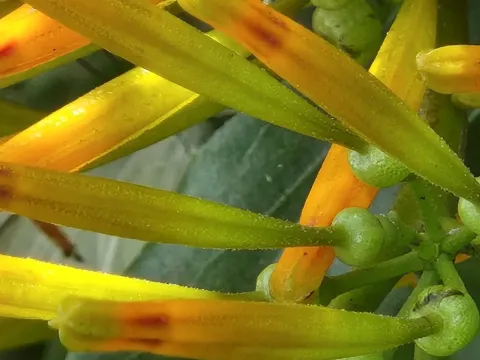
The plant features distinct, often bright, tubular flowers that have co-evolved with specific avian pollinators. This adaptation ensures successful reproduction in its native habitat while allowing the plant to sustain its population across a wide geographic range.
Regarding human use, Agelanthus has limited applications in traditional medicine and is primarily monitored as a weed or pest in forestry and orchard management. Its ecological significance lies in its role within the complex network of plant-pollinator interactions in African ecosystems.
Agelanthus is subject to various threats, primarily from herbivorous insects that consume its leaves and stems. These pests can significantly reduce the vitality of the shrub, sometimes leading to its decline if the infestation is severe enough to cause tissue damage.
Fungal pathogens and pathogens affecting the host tree represent significant risks to the survival of the parasite. Since the health of Agelanthus is intrinsically linked to the host's physiological state, any decline in the host tree directly impacts the parasite's success.
In agricultural and horticultural settings, Agelanthus is viewed as a threat that requires management. Physical removal through pruning is the standard procedure to protect fruit-bearing trees from the nutrient depletion caused by this parasite.
Bird-mediated seed dispersal is the primary mode of spreading, which makes containment challenging. Gardeners must remain vigilant to identify and remove new infestations before the parasite can establish a robust haustorial connection to the host branch.
Integrated pest management strategies focusing on sanitation pruning and canopy maintenance are the most effective ways to manage Agelanthus. Chemical control is generally impractical, emphasizing the importance of preventative physical measures to protect the health of valuable tree species.