
Agelanthus djurensis
Agelanthus djurensis
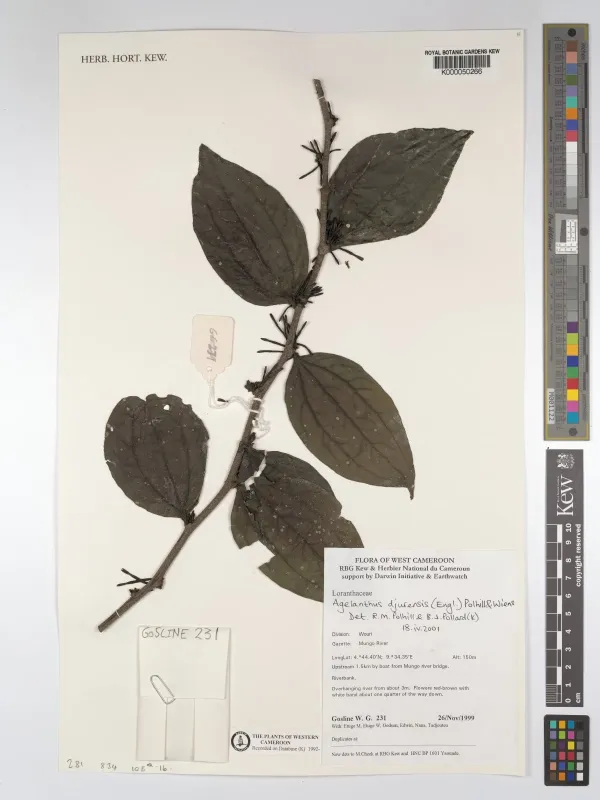
Description
Growing requirements
Agelanthus djurensis is a species of mistletoe belonging to the Loranthaceae family. It is recognized as a perennial hemi-parasitic shrub native to the tropical regions of Africa.
The plant functions by attaching itself to the branches of various host trees. It utilizes specialized organs known as haustoria to penetrate the bark of the host and extract water and essential nutrients from its vascular system.
Geographically, it is found in countries such as Sudan and Ethiopia. It thrives in tropical climates characterized by distinct wet and dry seasons, typically colonizing trees within savanna and woodland habitats.
Structurally, the plant is adapted to live in the canopy, where it receives sufficient sunlight for photosynthesis. Its leaves and stems are designed to retain moisture even under intense tropical heat.
While not a traditional agricultural crop, it plays a complex role in the local ecosystem by acting as both a primary producer via photosynthesis and a consumer of host tree resources.
Main diseases and pests
The primary threat to the stability of Agelanthus djurensis populations is the destruction of native tree hosts due to logging and land clearing for development.
Like many species in its family, it faces risks from climate change, which alters the phenology of flowering and fruit production, thereby affecting its reproductive cycles.
Insects and fungal diseases represent the natural enemies of the plant, often colonizing the stems and impacting its ability to efficiently transfer nutrients from the host.
Increased human activity in savanna regions leads to the habitat loss that directly affects the density and distribution of this plant species.
Since this plant does not have commercial value, there is limited data on pest management, and natural ecological balance serves as the primary regulatory mechanism for its population.