
Agelanthus heteromorphus
Agelanthus heteromorphus
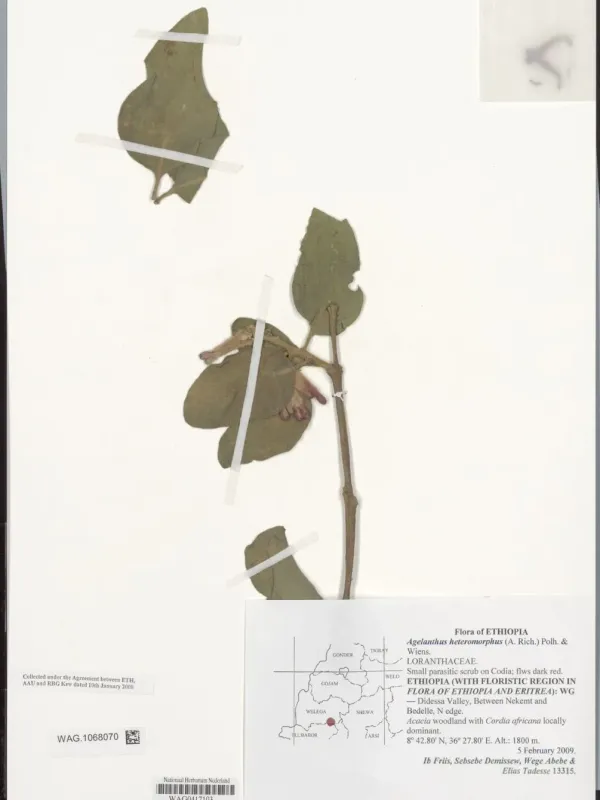
Description
Growing requirements
Agelanthus heteromorphus is a member of the Loranthaceae family, widely known for its hemiparasitic lifestyle. It typically grows as an epiphyte, attaching itself to the branches of host trees in various tropical ecosystems across Africa.
This species features specialized haustoria, which are root-like structures that penetrate the host plant's tissues to extract water and essential minerals. Despite this parasitic connection, the plant maintains photosynthetic activity, functioning as a semi-parasite rather than a complete parasite.
The environmental requirements for this plant are centered on tropical climates with sufficient annual rainfall and humidity. It occupies the canopy layer of trees, where it receives direct sunlight, which is vital for its photosynthesis and overall physiological development.
Its botanical features include leathery leaves and characteristic flower structures that have evolved to attract specific pollinators, such as birds or insects found within its native habitat. This co-evolution is key to the reproductive success of the species.
There is no agricultural production of Agelanthus heteromorphus, as it is classified as a botanical pest in many regions. Its presence is generally monitored by local forest services because extensive infestation can lead to branch death and reduced vigor in commercial orchard trees.