
Agapanthus praecox subsp. orientalis
Agapanthus praecox subsp orientalis (F.M. Leight) F.M. Leight.
Description
Growing requirements
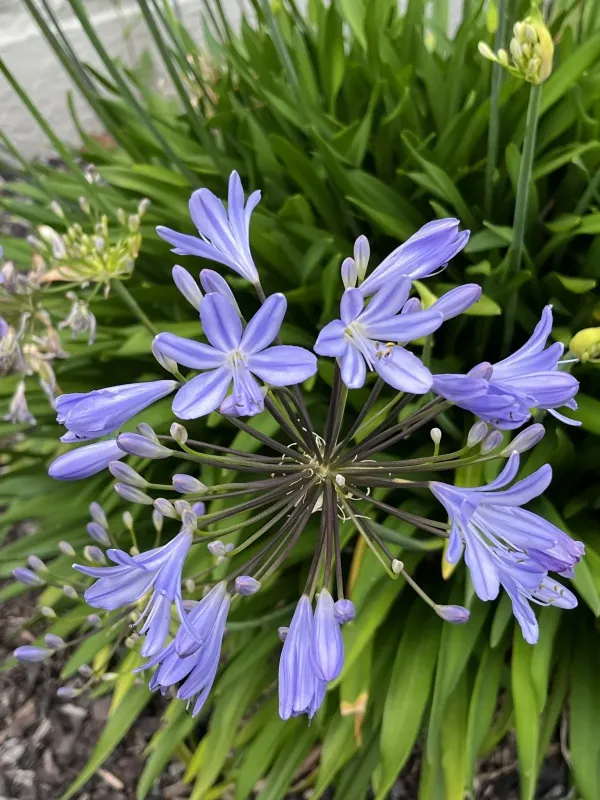
Agapanthus praecox subsp orientalis is a perennial herbaceous plant belonging to the Amaryllidaceae family. Originating from the coastal regions of South Africa, the species is well-adapted to mild, sun-drenched environments, which influence its development and growth patterns.
The plant features a robust root system consisting of thick, fleshy rhizomes that store vital nutrients. Its strap-shaped, basal leaves can reach lengths of 50–70 cm, forming dense and highly decorative rosettes that maintain a deep green appearance throughout the active growing season.
For optimal growth, this culture requires sunny locations sheltered from strong winds. It performs best in fertile, well-draining loamy soils with a neutral to slightly acidic pH, as waterlogging in the root zone is particularly detrimental to the plant's health and vigor.
Climate requirements include moderate humidity and protection from severe frosts. In regions with harsh winters, it is typically cultivated as a container plant, requiring relocation to a frost-free indoor environment whenever temperatures drop below freezing.
The primary horticultural application of this species is in landscape architecture and ornamental gardening. Agapanthus orientalis is widely used for creating dramatic mass plantings, defining borders, and serving as an elegant focal point in terrace and patio container gardening.
Main diseases and pests
The most common pests affecting the plant include spider mites and scale insects, which typically thrive in dry indoor conditions. Regular inspection of the foliage and the application of appropriate acaricides are essential for controlling and preventing insect infestations.
Fungal diseases, specifically root rot, are often caused by overwatering and poor soil aeration. To maintain plant health, it is critical to ensure proper drainage in all containers and to strictly monitor irrigation schedules, especially during the plant's winter dormancy phase.