
Agapanthus inapertus subsp. parviflorus
Agapanthus inapertus Beauverd subsp. parviflorus F. M. Leight.
Description
Growing requirements
Agapanthus inapertus subsp. parviflorus is a perennial herb belonging to the Agapanthaceae family. Native to South Africa, this species is well-adapted to habitats characterized by distinct seasonal cycles and high sunlight exposure.
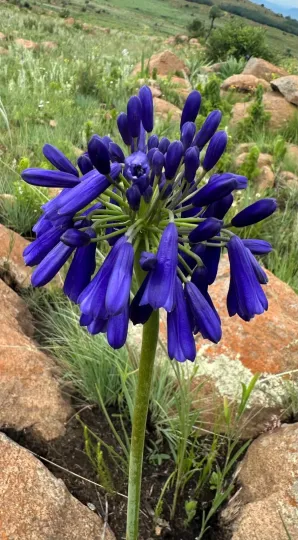
The plant features a basal rosette of narrow, strap-like leaves and sturdy scapes. Its most distinctive characteristic is the cluster of drooping, tubular florets, which are smaller than those of the nominate species, providing a delicate and refined appearance.
Cultivation requires well-drained, nutrient-rich soil with a slightly acidic to neutral pH. A substrate with high organic matter content is preferred, provided that it does not retain excess water, which could lead to root hypoxia.
The species thrives in full sun but can tolerate partial shade in hotter climates. It requires consistent moisture during the growing season, while a dormant, cooler period with minimal watering is essential for successful flowering in the following year.
This plant is primarily used as an ornamental crop in landscape gardening. It is highly valued for its vertical accent, drought tolerance once established, and suitability for both traditional flower beds and container gardening in patio areas.
Main diseases and pests
Spider mites are a primary concern when growing this plant in greenhouses or enclosed environments with low humidity. Regular misting and proper ventilation are effective preventive measures against these pests.
Root rot, often caused by Pythium or Phytophthora species, is a significant threat associated with poor drainage. Implementing a rigorous irrigation schedule and ensuring the soil is never waterlogged is critical for plant health.
Mealybugs can infest the leaf axils, leading to stunted growth and the spread of sooty mold. Monitoring and localized chemical treatment are necessary to prevent these pests from spreading through the entire collection.
Slugs and snails frequently cause damage to young shoots in outdoor settings. Protecting the perimeter with abrasive barriers or biological controls is a standard practice in regions with high slug activity.
Botrytis blight may occur during extended periods of cool, wet weather, affecting both foliage and flowers. Improving air circulation around the plants and removing infected debris promptly helps manage the spread of the fungus.