
Agapanthus inapertus subsp. intermedius
Agapanthus inapertus Beauverd subsp. intermedius F. M. Leight.
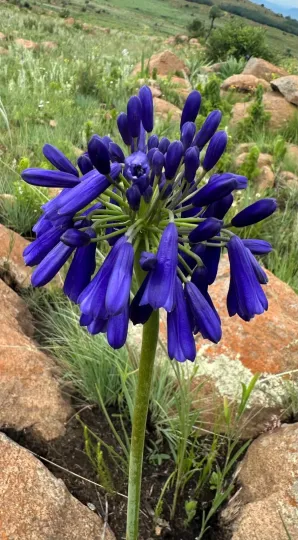
Description
Sowing dates
Sowing Agapanthus inapertus subsp. intermedius seeds should take place in early spring using a well-draining seed-starting mix. The seeds require consistent warmth, ideally between 20°C and 22°C, to germinate successfully.
It is important to keep the sowing medium moist but not waterlogged, as this is a delicate stage where seedlings are susceptible to fungal damping-off.
Once seedlings have developed at least two pairs of true leaves, they can be carefully pricked out and transplanted into individual pots to allow room for root development.
For those preferring vegetative propagation, dividing mature clumps in the spring is the most reliable method, as it ensures the new plants maintain the genetic characteristics of the parent.
Young plants should be hardened off before being transitioned to outdoor environments to prevent transplant shock caused by rapid changes in temperature and light intensity.
Growing requirements
This species belongs to the Agapanthaceae family and is native to the summer-rainfall regions of South Africa. It thrives in sunny locations with well-drained, fertile soil.
The plant requires a soil pH that is slightly acidic to neutral. High organic matter content helps to sustain the plant during its vigorous growing season.
Agapanthus plants are known for their tolerance to various conditions, but they require protection from freezing temperatures in colder climates, often necessitating cultivation in containers.
Regular watering is essential during the active growing months of spring and summer, while a drier environment should be maintained during the winter dormancy period.
Providing adequate spacing between plants is beneficial for air circulation, which helps reduce the humidity around the foliage and prevents disease outbreaks.
Main diseases and pests
Root rot is the most significant threat, typically caused by heavy, compacted soil or over-irrigation during periods of low light and cool temperatures.
Slugs and snails often pose a challenge, particularly in the spring, as they feed on the succulent tissue of emerging leaves and developing flower buds.
Aphids can accumulate on the flower stalks, causing distortion and stunted growth; regular inspection and timely interventions are recommended to manage populations.
In greenhouse settings, spider mites can become an issue if the ambient air remains too dry for extended periods, necessitating increased humidity levels.
General hygiene, such as removing dead foliage and maintaining clean growing areas, plays a vital role in preventing the spread of common garden pests.