
African Lily
Agapanthus inapertus Beauverd subsp. Inapertus
Description
Growing requirements
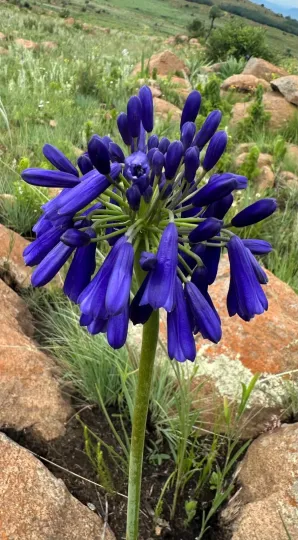
Agapanthus inapertus, also known as the drooping agapanthus, is a member of the Amaryllidaceae family. It is a perennial herbaceous plant featuring distinctive, bell-shaped, deep-blue flowers that hang downwards, giving the inflorescence a unique architectural appearance.
Originating from South Africa, this species naturally inhabits rocky slopes and grasslands. In garden settings, it is valued for its hardiness once established, although in colder climates, it must be grown in containers and moved indoors to avoid frost damage during the winter months.
The plant thrives in full sun but can tolerate partial shade in hotter climates. Soil requirements are specific: the medium must be well-drained, fertile, and slightly acidic to neutral to prevent root rot, which is a common issue for this genus in heavy, waterlogged soils.
Agricultural management involves deep watering during the active growing season, combined with balanced liquid fertilization to support the development of flower stalks. As autumn approaches, watering should be significantly reduced to encourage the plant's natural dormancy period.
In ornamental horticulture, Agapanthus inapertus is used in border plantings, rock gardens, and large patio containers. Due to its long-lasting, elegant flowers, it is also highly sought after for floral arrangements, making it a valuable addition to commercial cut flower production.
Main diseases and pests
The most significant threat to the health of the drooping agapanthus is fungal root rot caused by poor drainage. Excess moisture trapped around the rhizomes inhibits oxygen uptake and creates an ideal environment for pathogens.
Pests such as spider mites and scale insects are common problems, especially when the plant is kept in dry, indoor conditions during the winter. Mealybugs can also infest the base of the foliage, sucking nutrients and weakening the plant.
To combat these threats, gardeners should implement integrated pest management (IPM). This includes washing the foliage to deter mites, manually removing scale insects, and using systemic insecticides when infestation levels exceed economic or aesthetic thresholds.
Sanitation is critical; all dead or decaying foliage should be removed promptly to prevent fungal spores from spreading. When repotting, always use fresh, sterile soil to eliminate soil-borne pathogens and larvae.
Maintaining proper air circulation around the plants is essential for reducing the risk of infestation. By ensuring the plants are not overcrowded and are kept in a well-ventilated area, growers can significantly lower the incidence of common botanical threats.