
Trichodesma zeylanicum
Trichodesma zeylanicum
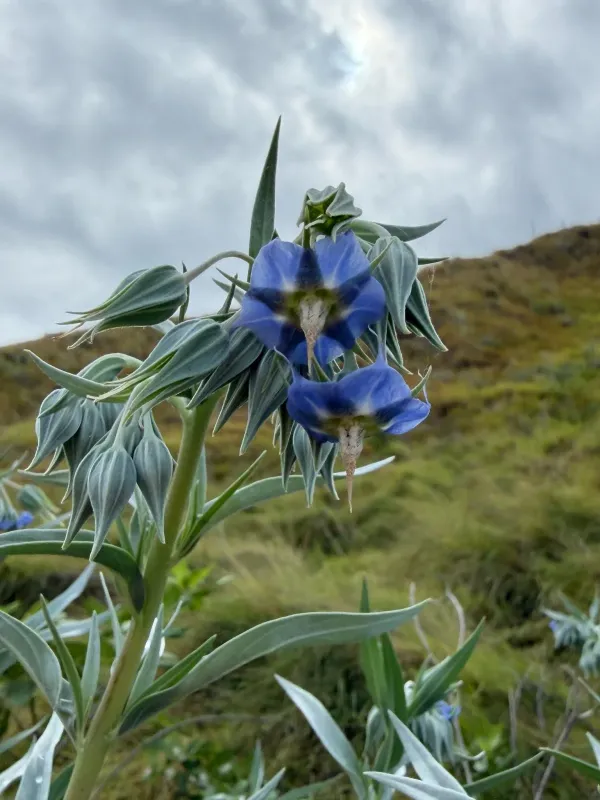
Description
How to tell it apart
Trichodesma zeylanicum belongs to the Boraginaceae family. It is an annual or occasionally perennial herbaceous plant with a robust stem that can reach heights of over one meter.
The leaves are lanceolate or ovate, often with a rough surface due to the presence of stiff hairs. The plant has a characteristic branched stem, which allows it to form dense thickets on open soil.
The flowers of Trichodesma zeylanicum have the typical five-petal form of the Boraginaceae family, usually colored in shades of blue, violet, or purple, with white variants appearing less frequently.
The root system is well-developed, allowing the plant to compete successfully for moisture and nutrients in deeper soil layers, even during dry periods.
The seeds are highly viable and possess specific appendages that facilitate dispersal by wind or animals, contributing to the rapid colonization of new areas.
Where it grows
This species is native to tropical and subtropical regions, primarily found in Australia, Africa, and Southern Asia.
In agroecosystems, Trichodesma zeylanicum prefers open areas, often infesting cereal, legume, and vegetable crops where the natural soil cover is disturbed.
The weed actively colonizes roadsides, wastelands, and pastures, posing a significant risk to livestock due to the presence of toxic compounds within its green tissue.
In fields, the plant most commonly thrives on light or sandy soils, where its root system can penetrate deep enough to ensure survival.
The rapid spread of the species is linked to its high seed production capacity, which allows it to infest vast areas of agricultural land in a short time.
Harm it causes
The primary danger of Trichodesma zeylanicum lies in its intense competition with crops for space, sunlight, and essential micronutrients.
The plant is considered a dangerous weed due to its toxicity to livestock, causing severe poisoning that damages the liver in animals that ingest it.
The high biomass of this weed hinders mechanized harvesting, clogging agricultural machinery and reducing the overall quality of the harvested grain.
Trichodesma zeylanicum can serve as a reservoir for various crop pathogens and pests, facilitating their spread within the field.
The ability of the seeds to remain dormant in the soil for extended periods makes this weed extremely difficult to eradicate, even with strict crop rotation practices.
How to control
Agronomic control methods include mandatory deep autumn plowing, which buries the seeds at depths that inhibit successful germination.
High-quality inter-row cultivation in row crops, carried out before the weed reaches its mass flowering stage, is a critical management practice.
Adhering to optimal sowing dates allows crop plants to outpace the growth of Trichodesma zeylanicum, thereby gaining a competitive advantage.
For chemical control, selective systemic herbicides should be applied during the active growth phase of the weed, when it is most susceptible to chemical treatments.
- Regular field monitoring before seed maturation.
- Elimination of infestations on roadsides and wasteland areas.
- Use of high-quality, certified seed free from weed impurities.
Taxonomy
- Latin name
- Trichodesma zeylanicum
- Family
- Бурачниковые
- EPPO code
- TRHZE