
Changeable velvetberry
Stachytarpheta mutabilis
Description
How to tell it apart
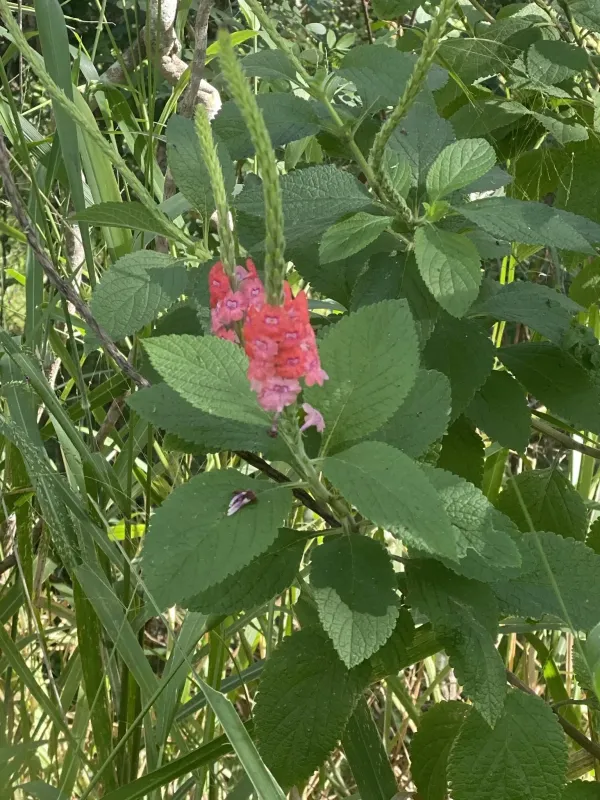
Changeable velvetberry (Stachytarpheta mutabilis) belongs to the Verbenaceae family. It is a perennial shrub growing 1 to 2 meters tall, featuring opposite, ovate leaves with serrated margins.
The inflorescences are long, dense spikes reaching 30-50 cm in length. The flowers show significant color variation, ranging from bright pink to purple or deep red, which is characteristic of this species.
The stems tend to become woody at the base over time, providing structural stability. The plant propagates primarily through seeds, which are easily dispersed by wind, water, or animals over long distances.
It possesses a deep and vigorous root system, allowing the plant to compete effectively for water and nutrients against other plant species within the soil profile.
The plant exhibits high adaptability to various light conditions, although it thrives best in open areas with ample sun exposure, which promotes abundant flowering.
Where it grows
This species is considered invasive in tropical and subtropical regions. It is most commonly found on abandoned agricultural lands, along roadsides, and in disturbed pastures.
In crop production, it poses a threat primarily to perennial crops, fruit orchards, and vegetable farms, where it rapidly colonizes available space.
It prefers moist, well-drained soils but can endure short periods of drought, making it a highly persistent weed in arid and semi-arid environments.
The plant actively colonizes field edges, gradually encroaching into the main crop area if its spread in surrounding buffer zones is not properly managed.
In regions where it has naturalized, it often forms thick, impenetrable stands that displace native flora and significantly hinder mechanized agricultural operations.
Harm it causes
The primary damage results from fierce competition with crops for space and resources, which can reduce yields by 15-30% in heavily infested areas.
Due to its rapid growth and bush-like form, the plant shades out young crop seedlings, hindering their development during early vegetative stages.
Changeable velvetberry acts as a potential reservoir for various viral and fungal diseases, which can then be transmitted to crops by insect vectors.
In pasture lands, this weed reduces the availability of palatable forage, decreasing the overall carrying capacity of the land, as most livestock avoid consuming this species.
The intensive root activity depletes soil nutrients, extracting significant amounts of nitrogen and micronutrients that are essential for the healthy growth of the cultivated crop.
How to control
Mechanical control involves regular uprooting of the bushes, including the entire root system, before the flowering phase to prevent further seed production.
Agronomic practices include deep tillage, which helps to disrupt the perennial root system and reduce the soil seed bank in the topsoil layers.
For chemical control, the use of systemic herbicides containing glyphosate or triclopyr is recommended, as these effectively penetrate the woody stems of the plant.
Mulching the soil surface with dense materials is an effective preventive measure, as it inhibits seed germination and prevents the establishment of new seedlings.
Strict field monitoring, especially after harvest, is necessary for the rapid detection and removal of isolated plants that could otherwise produce a new generation of seeds.
Taxonomy
- Latin name
- Stachytarpheta mutabilis
- Family
- Вербена лекарственная
- EPPO code
- STCMU