
Stachytarpheta indica
Stachytarpheta indica
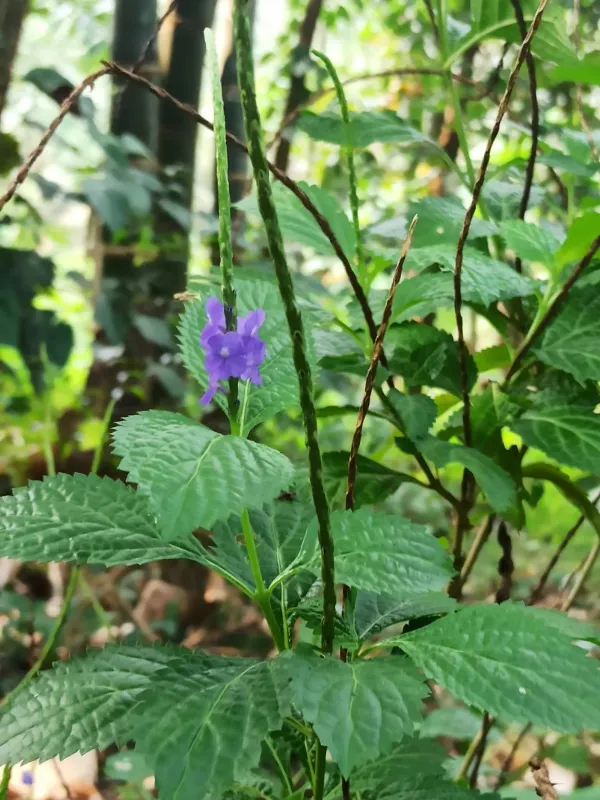
Description
How to tell it apart
Stachytarpheta indica is a perennial herb belonging to the Verbenaceae family, recognized for its upright and branched growth habit.
The plant features opposite, ovate leaves with serrated margins, which serve as a primary diagnostic character for distinguishing it from other field weeds.
Its inflorescences are distinct, thin, spike-like racemes, often referred to as "rat-tail" inflorescences due to their slender, elongated appearance.
The flowers are typically a deep blue or violet color, arranged in a way that makes the spike look dense and colorful during the blooming season.
The fruit of the plant splits into two hard nutlets, which are highly resistant to environmental stress and facilitate efficient seed dispersal.
Where it grows
This weed is commonly found in tropical and subtropical climates, where it thrives in disturbed habitats and sun-exposed agricultural environments.
Stachytarpheta indica colonizes neglected pastures, roadsides, and the edges of plantations, showing a high preference for sunny and open terrain.
It frequently infests diverse agricultural systems, including sugar cane, cacao, and various tropical fruit orchards, where it competes for space.
The plant is highly adaptable to various soil types, ranging from sandy to clay-rich soils, making it a widespread weed in warmer regions globally.
It often spreads along irrigation ditches and water transport systems, utilizing these areas as corridors for expanding its territory further into cultivated land.
Harm it causes
Stachytarpheta indica competes intensely with crops for vital resources such as sunlight, water, and soil nutrients, thereby reducing overall crop yields.
Due to its rapid growth and deep root system, it significantly depletes soil fertility, which can lead to stunted crop growth and weaker harvest quality.
The weed acts as a host for various insects and plant pathogens, which can easily transfer to neighboring crops and cause secondary damage to the harvest.
Its presence creates dense physical barriers that impede mechanical harvesting and maintenance, increasing the labor and cost requirements for farm management.
Uncontrolled growth of this species can lead to a total loss of productivity in severely infested areas, requiring immediate remediation strategies.
How to control
Controlling Stachytarpheta indica requires a persistent and multi-faceted strategy that combines physical labor with chemical application for best results.
Mechanical control through deep tillage is effective for disrupting the root system and preventing the plant from establishing a long-term presence in the field.
Systemic herbicides are recommended during the plant's active vegetative growth phase to ensure that the chemical reaches the root system and kills the weed.
Managing the weed before it sets seeds is crucial, as the high seed output of the plant can cause future infestations that are much harder to manage.
- Regular mowing to prevent flowering.
- Use of mulches to suppress seedling emergence.
- Monitoring infested patches to prevent further spread.
Taxonomy
- Latin name
- Stachytarpheta indica
- Family
- Вербена лекарственная
- EPPO code
- STCAN