
Stachytarpheta jamaicensis
Stachytarpheta jamaicensis
Description
How to tell it apart
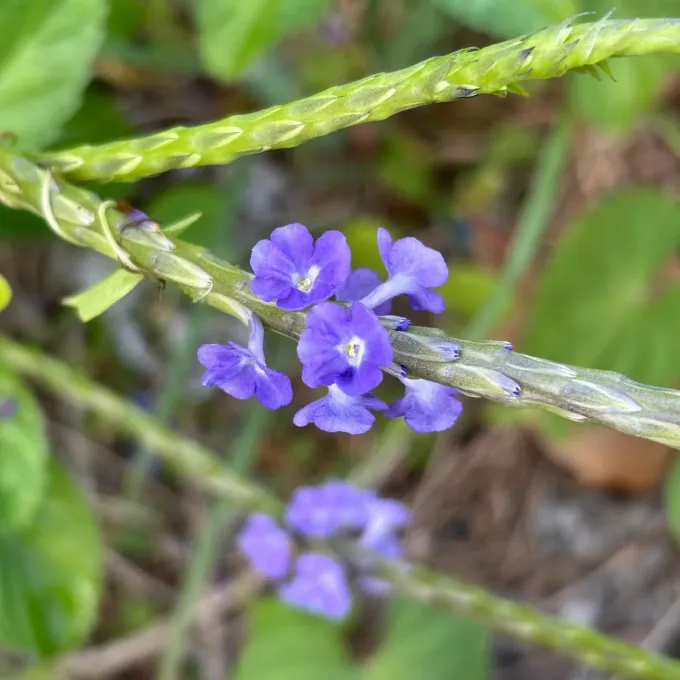
Stachytarpheta jamaicensis, commonly known as blue porterweed, is a perennial herbaceous plant or subshrub belonging to the Verbenaceae family. It is recognized by its long, spike-like inflorescences that can measure up to 40 cm in length.
The leaves are opposite, ovate with serrated margins, and often possess a glossy texture. These features help the plant thrive in high-sunlight environments while managing water loss efficiently.
The flowers are small, tubular, and deep blue to purple in color. They bloom sequentially along the flower spike, ensuring that the plant remains in a flowering state for an extended duration throughout the season.
The stems tend to become woody at the base, providing the plant with excellent structural integrity and resilience against physical disturbances. Its taproot system is deep and well-developed.
Seeds are produced in large quantities and are highly resilient. They can remain viable in the soil seed bank for several years, waiting for favorable conditions to germinate.
Where it grows
This species is widely distributed throughout tropical and subtropical regions. It typically invades disturbed sites, roadsides, neglected pastures, and the edges of cultivated agricultural fields.
Stachytarpheta jamaicensis acts as a serious weed in crops such as sugarcane, coffee, and pineapples. It rapidly colonizes vacant areas, creating dense stands that effectively outcompete native and crop species.
The plant demonstrates remarkable adaptability to various soil types, ranging from nutrient-poor soils to more fertile landscapes. This versatility allows it to persist in degraded environments.
It prefers open, sunny locations where it can achieve maximum growth rates. Its invasive nature often leads to the displacement of beneficial ground cover in pastures and orchard margins.
Seed dispersal occurs via wind, water, and animal transport, which facilitates the rapid spread of the weed into neighboring farm properties and protected habitats.
Harm it causes
The primary impact of this weed is its intense competition for limited resources such as water, soil nutrients, and sunlight. Dense infestations can significantly stunt the growth of young crop plants.
In grazing lands, this weed is problematic because it is generally unpalatable to livestock. Consequently, its presence leads to a reduction in the carrying capacity and overall quality of pastures.
The thick woody stems and heavy biomass of the plant create physical obstacles for agricultural machinery, necessitating additional labor and time for field clearing and maintenance.
Stachytarpheta jamaicensis often serves as an alternative host for various pests and plant viruses, which can then spread to valuable crops, leading to disease outbreaks and yield loss.
Financial losses for farmers increase due to the recurring costs of herbicides and specialized cultivation practices required to suppress this persistent and resilient species.
How to control
Agrotechnical management primarily involves manual or mechanical removal before the plant reaches its flowering stage. This practice is crucial to prevent the replenishment of the soil seed bank.
Deep plowing can be highly effective in dislodging and destroying the root system. It is best conducted during dry conditions to ensure the plants dehydrate quickly after being uprooted.
Chemical control usually requires systemic herbicides applied at the early growth stages. These treatments are most effective when the plant is actively growing and translocating nutrients.
Integrating mechanical removal with strategic herbicide application provides the most reliable control method for large infestations and heavily invaded farm perimeters.
Ongoing monitoring is essential to prevent re-colonization. Maintaining a competitive ground cover of desirable species can also help suppress the germination of new seeds in vulnerable areas.
Taxonomy
- Latin name
- Stachytarpheta jamaicensis
- Family
- Вербена лекарственная
- EPPO code
- STCJA