
Stachytarpheta cayennensis
Stachytarpheta cayennensis
Description
How to tell it apart
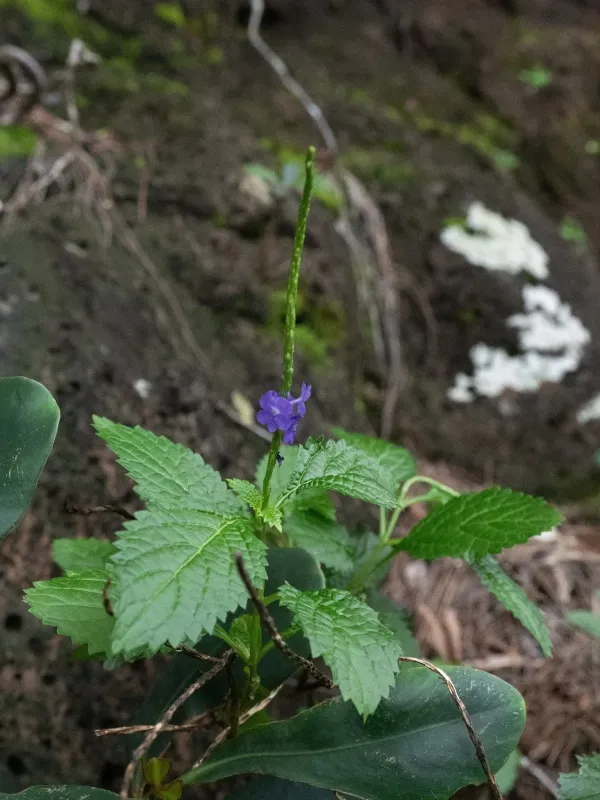
Stachytarpheta cayennensis, commonly known as Cayenne snakeweed, belongs to the Verbenaceae family. It is a perennial herbaceous shrub that can reach heights of up to 1.5 meters, characterized by its square, branching stems.
The leaves are opposite, ovate in shape, and possess serrated margins. Their texture is typically smooth, though some variations show minor pubescence, which helps the plant retain moisture in varied environments.
The inflorescences are long, slender terminal spikes, often measuring 30–40 cm in length. The flowers are deep blue or violet-purple, featuring a small white throat, and are known for their continuous blooming cycle.
Its root system is strong and taprooted, allowing the plant to anchor deeply into the soil. This structural strength enables the weed to survive under difficult conditions, including periods of moderate drought.
The seeds are small and encased in a woody fruit segment, which facilitates their dispersal by water, soil movement, and equipment, allowing the species to spread rapidly across cultivated land.
Where it grows
This weed is native to tropical regions and has become a widespread invasive species in various parts of the world. It thrives in open, sunny environments such as pastures, roadsides, and disturbed forest edges.
In agricultural settings, it infests plantations of coffee, cocoa, and sugarcane. It is particularly problematic in areas where the soil has been cleared, as it quickly colonizes the available space before crops can establish canopy.
Stachytarpheta cayennensis is highly adaptable to a variety of soil types. It is particularly persistent in fields with minimal tillage, where seeds can remain viable in the soil for extended periods before germinating.
The plant often forms dense, monotypic stands, outcompeting native flora and reducing the biodiversity of the ecosystem. Its invasive nature makes it a significant nuisance for land management and maintenance.
Furthermore, it shows a high tolerance for poor soil fertility, allowing it to dominate areas that are currently undergoing restoration or are temporarily neglected by agricultural management.
Harm it causes
The primary harm caused by Stachytarpheta cayennensis is its aggressive competition with crops for light, nutrients, and water. By establishing itself quickly, it can severely stunt the growth of young crops.
It acts as a reservoir for various agricultural pests and pathogens. The thick foliage provides an ideal environment for mites and certain fungal spores to develop, which then easily migrate to the commercial crop.
In grazing pastures, the presence of this plant is detrimental, as it can reduce the available biomass for livestock. Some reports suggest the plant may have low palatability or anti-nutritional properties for cattle.
Mechanical harvesting is hindered by the weed's woody, fibrous stems. When dense patches are present, they can clog harvesting machinery, leading to equipment downtime and increased operational costs for farmers.
Economic losses arise from both decreased crop yields and the increased expenditure required for chemical or manual weeding operations to manage the infestation effectively.
How to control
Effective management of this weed requires an integrated approach that focuses on both physical removal and chemical suppression. Early intervention is crucial to prevent the plant from reaching the seeding stage.
Key control measures include:
- Regular mechanical cultivation to uproot and destroy the taproot.
- Mowing or slashing the weed before flowering to prevent seed production.
- Using competitive cover crops to shade out the weed seedlings.
- Application of systemic herbicides during the active growth phase.
- Sanitation of equipment to prevent the transport of seeds between fields.
Chemical control usually involves herbicides effective against broadleaf weeds, applied as a spot treatment to avoid harming neighboring crops. The timing of the application should align with the weed's vegetative stage for maximum efficacy.
Crop rotation and consistent field monitoring are essential for long-term reduction of the seed bank. By alternating land use and cultivation methods, the cycle of the weed is broken, preventing it from regaining dominance.
Taxonomy
- Latin name
- Stachytarpheta cayennensis
- Family
- Вербена лекарственная
- EPPO code
- STCDI