Grenader, WG
Jiangsu Institute of Ecomones Co., Ltd.
Herbicides
0
0
·
59
8 offers
29.36 €per 1 l
Buy
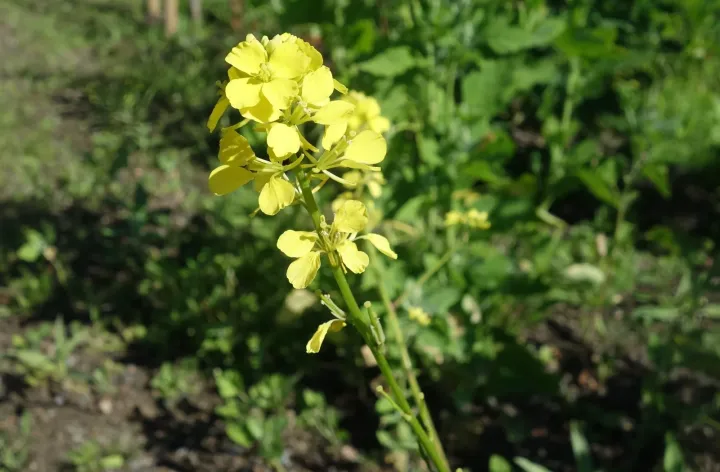
Wild mustard (Sinapis arvensis) is an annual broadleaf weed belonging to the Brassicaceae family. It is a common and troublesome plant in many agricultural systems worldwide, known for its rapid growth and high seed production.
The plant grows with an erect, branched stem reaching heights of 20 to 80 centimeters. The lower part of the stem and the leaves are typically covered in stiff, coarse hairs, which helps in identifying the species in its early stages.
The leaves are variable in shape: the basal leaves are petiolate and lyrate-pinnatifid, while the upper leaves are lanceolate and sessile. This morphological diversity allows it to capture sunlight efficiently in competitive crop environments.
Bright yellow flowers with four petals grow in elongated racemes at the top of the stems. Flowering occurs over a prolonged period from late spring through autumn, ensuring continuous seed production throughout the growing season.
The fruit is a silique, or a pod, with a prominent beak. Each pod contains several small, round, dark brown or black seeds that possess long-term dormancy, remaining viable in the soil for several years.
Wild mustard is a cosmopolitan weed that thrives in fertile, nitrogen-rich soils. It is frequently found in cultivated fields, along roadsides, waste areas, and in disturbed landscapes where competition is initially low.
It is a significant competitor in a wide range of spring-sown crops, including wheat, barley, oats, and legumes. It also poses a major threat to oilseed rape crops due to their botanical relationship.
The plant is frost-tolerant and germinates very early in the season, often before the main crop reaches a competitive size. This head start allows it to establish a strong root system and shade out germinating crop seedlings.
Its ability to spread via agricultural machinery, contaminated seed lots, and manure makes it a persistent nuisance in modern farming. It can quickly colonize large areas if left unchecked by integrated weed management.
Due to its high adaptability, it performs well across different climatic zones. It is particularly difficult to manage in regions where crop rotations are narrow and do not include diverse herbicide modes of action.
The primary damage caused by wild mustard is competition for essential nutrients, water, and sunlight. High densities of this weed can drastically reduce the photosynthetic capacity and biomass of the host crop.
It acts as an alternative host for several pests and diseases that affect cultivated Brassicaceae, such as flea beetles and various fungal pathogens. This increases the burden on insecticide and fungicide applications.
Contamination of the grain harvest with wild mustard seeds is a major economic issue. Because the seeds are small, they are difficult to separate from valuable crops like canola or flax, reducing quality and market value.
In cases of severe infestation, wild mustard can cause significant yield losses, often ranging from 20% to 50% depending on crop density and the timing of the weed emergence relative to the crop.
The weed's capacity to produce thousands of seeds per plant ensures that even a few escaped individuals can maintain a long-lasting soil seed bank, perpetuating the infestation for many years if not treated correctly.
Successful management begins with proactive cultural practices, such as crop rotation. Rotating non-brassica crops with small grains helps disrupt the life cycle of this weed and lowers the overall seed bank pressure.
Mechanical tillage is highly effective during the early spring. By performing light cultivation or harrowing to induce the germination of weed seeds, farmers can eliminate a significant portion of the population before sowing.
Chemical control is the most common method in modern agriculture. Selective post-emergence herbicides, such as those containing 2,4-D, MCPA, or sulfonylureas, provide effective control in cereal crops when applied during the weed's seedling stage.
In broadleaf crops like canola or sunflowers, farmers utilize herbicide-tolerant hybrids or specific systemic herbicides to target the weed without damaging the crop. Precision spraying helps minimize costs and chemical load.