
Fiddleneck Phacelia
Phacelia tanacetifolia
Description
How to tell it apart
Fiddleneck Phacelia (Phacelia tanacetifolia) is a member of the Boraginaceae family. It is an annual herbaceous plant that grows up to 100 cm in height with a branched stem.
The leaves of this plant are pinnately divided, which gives them a distinctive look similar to tansy leaves. The entire plant is covered with fine, stiff hairs, characteristic of the family.
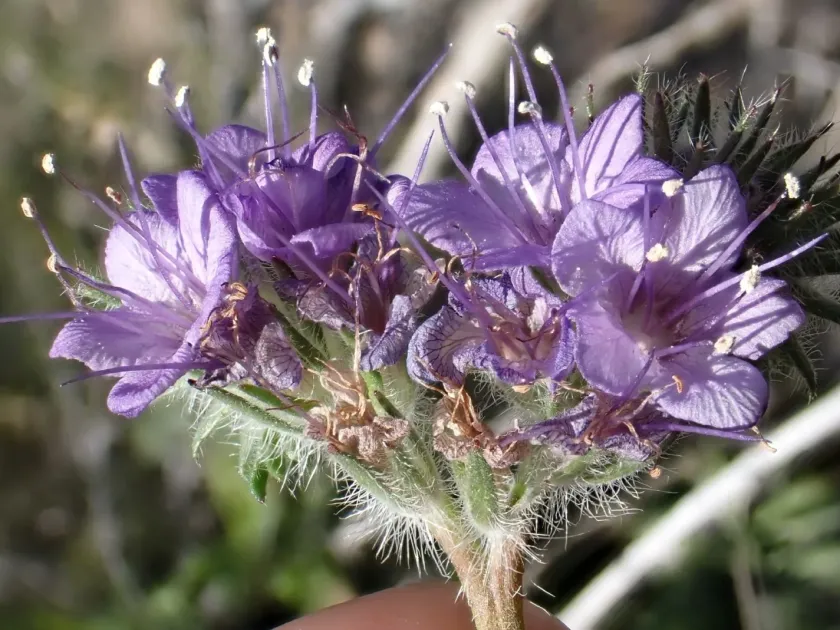
The flowers are small and gathered in coiled, fiddle-like inflorescences. They typically have a light blue to violet color, making the plant easily recognizable during the blooming stage.
Its root system is a deep taproot that provides excellent nutrient and water uptake, allowing the plant to thrive even in competitive environments with cultivated crops.
Seeds are dark in color and are known for their ability to remain viable in the soil for several years, which presents a challenge for long-term weed management on farms.
Where it grows
While frequently sown as a green manure or a honey plant, Phacelia can become a problematic weed in agricultural settings if not properly managed before it sets seed.
It prefers well-drained, sunny locations and is often found on fallow fields, roadsides, and in grain crop fields where its seeds have been dispersed by wind or machinery.
In winter crop fields, volunteer Phacelia can germinate in the autumn, competing aggressively with the newly emerging crop for space, light, and soil moisture.
The plant demonstrates significant ecological plasticity, meaning it can adapt to various climates and soil types, successfully colonizing fields after harvesting is completed.
It thrives in disturbed soils, making it a common sight in areas with poor tillage practices or where cover crops were not adequately terminated before flowering.
Harm it causes
Phacelia causes harm primarily by competing for vital resources such as sunlight, nitrogen, and water, which often results in stunted growth of the surrounding agricultural crops.
Due to its vigorous growth and rapid development, it can quickly shade out lower-growing crops, significantly reducing their potential yield during the critical growth phases.
The dense biomass of the weed can interfere with harvesting equipment, increasing the operational time and maintenance costs for farmers during the collection of crops.
As a host for specific insects and diseases, it can maintain pest populations in the field, potentially affecting subsequent plantings if proper crop rotation is not followed.
In fields with high infestation levels, the presence of Phacelia leads to uneven crop maturity, which complicates harvesting and negatively impacts the quality of the harvested produce.
How to control
Effective control requires a multi-faceted approach, starting with timely mechanical termination. It is crucial to kill the plants before they reach the flowering stage.
Deep plowing and regular discing are very effective at burying seeds and destroying young sprouts, thereby reducing the seed bank in the soil over time.
- Timely cultivation of field edges and headlands.
- Use of competitive crop rotations to naturally suppress weed growth.
- Application of selective herbicides during the early seedling stage.
Chemical control is highly effective when herbicides targeting broad-leaved weeds are applied early, specifically when the Phacelia is in the rosette stage of development.
Consistent monitoring and early intervention are key to preventing Phacelia from becoming a persistent weed issue in large-scale farming operations and field management systems.
Taxonomy
- Latin name
- Phacelia tanacetifolia
- Family
- Бурачниковые
- EPPO code
- PHCTA