
Indian heliotrope
Heliotropium indicum
Description
How to tell it apart
Indian heliotrope (Heliotropium indicum) is an annual herb belonging to the Boraginaceae family. It typically grows to a height of 30–60 cm and features stems covered with coarse, short hairs.
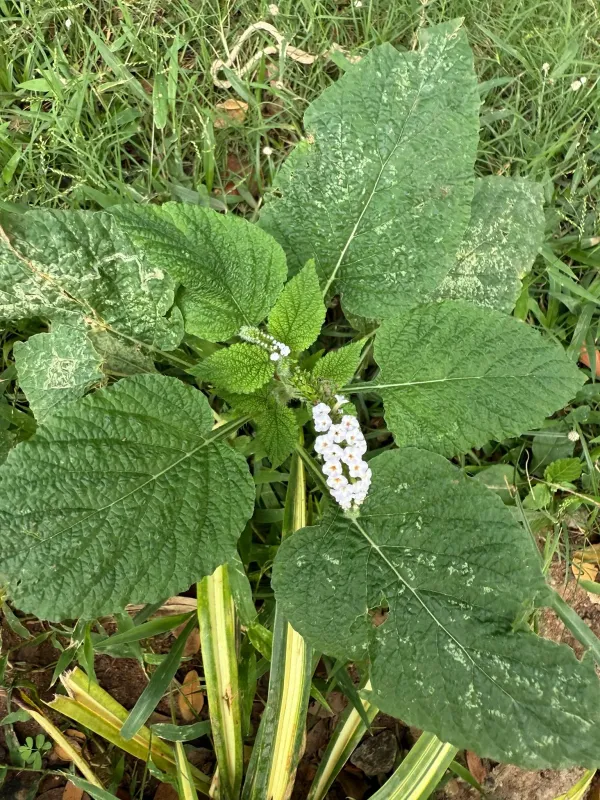
The leaves are alternate, ovate to oblong in shape, with distinct wavy or crenate margins. The leaf surface is notably rugose (wrinkled) and presents a deep, dark green color.
Flowers are arranged in terminal, coiled spikes that resemble a scorpion's tail, which is a hallmark identification feature of this genus. The corolla is small, tubular, and ranges from pale violet to white.
The fruit consists of a schizocarp that divides into two or four nutlets upon maturity, which are often dispersed by water, animals, or agricultural machinery.
The plant contains pyrrolizidine alkaloids, which are toxic to humans and livestock if ingested, causing damage to the liver.
Where it grows
Indian heliotrope prefers moist, fertile, nitrogen-rich soils. It is commonly found in disturbed areas such as riverbanks, roadsides, waste grounds, and ditches.
In agricultural settings, it frequently invades irrigated fields, vegetable gardens, and plantations, thriving particularly well in damp environments.
This species displays high ecological plasticity, allowing it to colonize recently cultivated or fallow lands rapidly after irrigation or rainfall.
It can persist in the soil seed bank for several seasons, ensuring re-emergence if the soil is disturbed or if the field is left uncultivated.
While it prefers full sunlight, it can tolerate partial shade, making it a persistent weed in various crop canopy structures.
Harm it causes
The weed exerts significant competition on crops for water, nutrients, and sunlight, particularly during the early vegetative growth stages of the crop.
By producing a dense canopy of rugose leaves, it effectively shades out smaller crop plants, leading to stunted growth and reduced final harvest yields.
It acts as an alternative host for several crop pests and plant viruses, which increases the necessity for integrated pest management and insecticide use.
The presence of Indian heliotrope in forage crops is a major safety concern; it is poisonous to cattle, horses, and sheep, causing acute or chronic liver failure.
Its presence at harvest time can lead to grain contamination, reducing the market quality and commercial value of the produced harvest.
How to control
Mechanical control involves thorough deep plowing of the soil during the pre-planting season to bury seeds and eliminate young germinating weeds.
Manual or mechanical weeding should be performed before the plant reaches the flowering stage to prevent the formation and dispersal of new seeds.
Crop rotation with dense-planting cover crops can effectively shade out Indian heliotrope, depleting its seed bank over a multi-year period.
Chemical control can be achieved through the use of post-emergence herbicides, ideally applied when the weeds are in the seedling stage (2–4 leaves).
Field sanitation is critical; removing plants from irrigation canals and surrounding field edges reduces the risk of seeds spreading into the primary production area.
Taxonomy
- Latin name
- Heliotropium indicum
- Family
- Бурачниковые
- EPPO code
- HEOIN