Sulfonil, WG, (nicosulfuron, 750 g
Jiangsu Institute of Ecomones Co., Ltd.
Herbicides
0
0
·
48
3 offers
35.88 €per pack
Buy
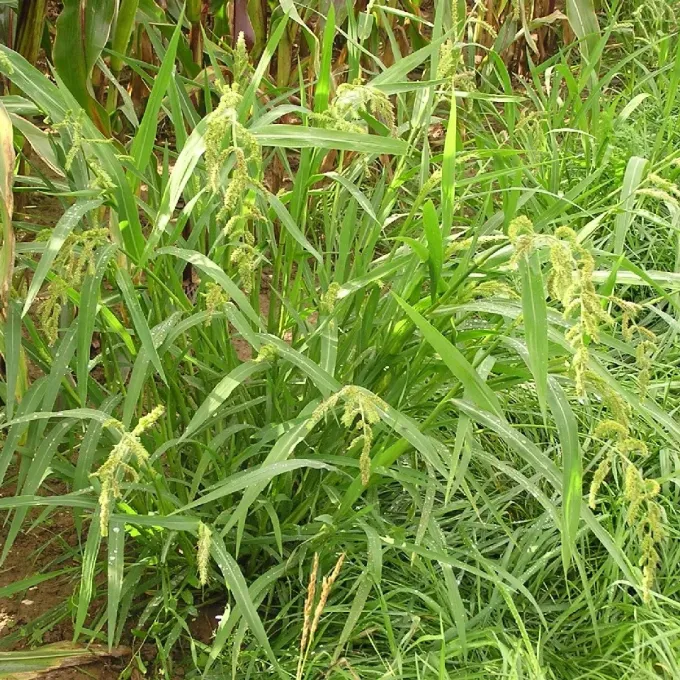
Barnyard grass (Echinochloa crus-galli) is a member of the Poaceae family. It is a highly aggressive annual grass weed found in numerous agricultural systems globally.
The plant features broad leaf blades without auricles or ligules, which is a key diagnostic feature for distinguishing it from other similar grass species.
Its inflorescence is a panicle consisting of several racemes. The spikelets are often crowded and can be awned or awnless, presenting a characteristic coarse appearance.
A single plant can produce a massive number of seeds, often exceeding 10,000, which can persist in the soil seed bank for over a decade.
The seedlings emerge during the late spring as soil temperatures rise, demonstrating rapid initial growth that quickly outcompetes many cultivated crop varieties.
Barnyard grass thrives in moist, nitrogen-rich soils, making it particularly troublesome in irrigated fields, such as those used for rice cultivation.
It is widely distributed across row crops, including corn, soybeans, and sunflowers, taking advantage of open soil spaces before crop canopy closure.
Disturbed areas, drainage ditches, and field margins serve as primary reservoirs for re-infestation, allowing the weed to spread into neighboring productive land.
The plant is highly adaptive to various moisture regimes, allowing it to survive both in waterlogged conditions and moderately dry environments.
Seed dispersal is frequently linked to farm machinery movement, water runoff, and contaminated seeds, facilitating the expansion of infestations into new fields.
The primary damage caused by Barnyard grass is intense competition for nutrients, moisture, and light, which drastically reduces crop vigor and yield potential.
Due to its rapid growth rate, it quickly overtops shorter crops, shading them out and hindering the photosynthetic processes essential for grain development.
The weed acts as an alternative host for several economically important insect pests and viral diseases that can migrate to the main crop, increasing management costs.
Dense infestations can physically impede harvesting equipment, leading to slower harvesting speeds, increased machinery wear, and potential contamination of harvested grain.
Its ability to extract large quantities of nitrogen from the soil often leads to nutrient deficiency symptoms in the primary crop, negatively affecting crop quality.
Cultural management techniques, such as early-season shallow cultivation and crop rotation with high-canopy crops, help suppress Barnyard grass development.
Stale seedbed techniques, involving the encouragement of weed germination followed by mechanical destruction before crop planting, are highly recommended.
Chemical control is primarily achieved through the use of graminicides, which should be applied when the weed is in the 2- to 4-leaf stage for maximum efficacy.
Successful management requires an integrated approach, as reliance on a single herbicide mode of action can lead to the development of herbicide-resistant populations.