Aura Plus — a new step in protecting rice crops
Cultivation of agricultural crops is always closely linked to the issue of protecting crops from harmful organisms, among which weeds occupy a significant place. Rice is no exception. For seven thousand years (the earliest archaeological traces of rice cultivation, discovered in Thailand, date back to 5370 ± 320 BC), humanity has developed and applied various methods for controlling weed populations in rice fields. However, despite this, today weeds found on rice fields constitute a group of more than 250 species. According to global and domestic rice farming practices, their presence on fields inevitably leads to losses of 20 to 70% of rice yield.
Currently, rice crops are planted on 145 million hectares across 118 countries, with an annual production of approximately 600 million tons of grain. In almost all countries, the most common and effective method for protecting rice crops from weeds remains the use of herbicides. Although reducing the overall volume of pesticide use, particularly herbicides, is a primary task facing agriculture in developed countries, the transition from conventional to organic farming has not yet provided sufficient control over weed populations and their harmfulness. Moreover, using only agronomic methods for controlling weeds in rice crops leads to an increase in the proportion of specific species (Echinochloa phyllopogon), which are practically impossible to control by any methods except chemical and mechanical (manual removal) due to their biological and ecological characteristics. By the way, in some Asian countries, where farmers do not have access to herbicides, farmers spend an average of 21 days manually weeding 1 hectare of rice crops.
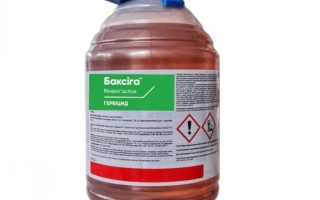
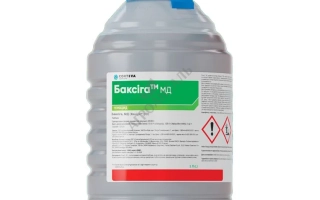
In this context, the chemical method of controlling weed development in rice crops remains the most effective and economically advantageous. The list of most commonly used herbicides worldwide includes about 67 products. In Ukraine, eight herbicides are registered for use on rice crops, six of which belong to the BASF group. We would like to focus on one of them in more detail. It is the new post-emergence systemic herbicide Aura Plus (clefoksidim), 7.5% concentrate emulsion.
Between 1999 and 2002, under the conditions of the Institute of Rice of UAAN, a study was conducted to evaluate the effectiveness of the new post-emergence systemic herbicide Aura Plus on rice crops.
As is known, in Ukraine, two schemes are used to protect rice crops from weeds:
— The first, when post-emergence herbicides are applied in the 1-2 leaf stage of rice, and herbicides for controlling wetland vegetation are applied in the tillering stage (4-6 rice leaves).
— The second, when grasses and wetland weeds are eliminated in one application at the seedling stage (2-3 leaves) using a combination of herbicides against grasses and wetland weeds.
Both the first and second schemes for weed control have certain advantages, and the decision regarding their application primarily depends on the technical equipment of the farm (i.e., presence or absence of equipment for ground application of pesticides) and the type of weed infestation during seedling stage.
In this context, the aim of our research was to study the influence of different application rates of herbicide Aura Plus on the growth and development of grassy weeds when applied in different weed control schemes. In addition, our task was to determine the optimal application technology of the product.
The study was conducted according to the following schemes:
1. Control (no treatment) 2. Façet KS (1.5 l / ha), Bazagran M (3.0 l / ha) 3. Aura Plus (1.3 l / ha), Bazagran M (3.0 l / ha) 4. Aura Plus (2.0 l / ha), Bazagran M (3.0 l / ha); 5. Aura Plus (2.6 l / ha), Bazagran M (3.0 l / ha);
and
1. Control (no treatment) 2. Façet KS (1.5 l / ha) + Sirius (0.2 kg / ha) 3. Aura Plus (0.75 l / ha) + Sirius (0.2 kg / ha) 4. Aura Plus (1.0 l / ha) + Sirius (0.2 kg / ha); 5. Aura Plus (1.5 l / ha) + Sirius (0.2 kg / ha).
The herbicidal activity of the Aura Plus product is manifested by blocking lipid biosynthesis at the growth points of grassy weeds. It is quickly absorbed by green leaves. Some portion of the herbicide penetrates into the plant through the root system. It rapidly moves through the weed tissues to the growth points. The first signs of the product's action on weeds can be observed as early as 3-5 days after application. Complete plant death occurs within 2-3 weeks.
The best application time for the herbicide Aura Plus is the stage of rice plant development from 3 leaves to mid-tillering. This period is also the most effective for eliminating Echinochloa. Before applying the herbicide, water levels in the furrows are reduced to 5 cm, so that 2/3 of the vegetative mass of weeds is above water. For 3-5 days after applying Aura Plus, it is desirable to maintain non-continuous irrigation. Over the next 5-7 days, water levels in the furrows gradually rise to normal levels.
Analysis of weed infestation after spraying rice crops with various rates of herbicide Aura Plus proves that this herbicide is highly effective against Echinochloa weeds, both when used alone and in combination with Bazagran M.
The results of monitoring show that applying herbicide Aura Plus alone at the seedling stage at a rate of 1.3 l / ha ensures destruction of 85.8% of Echinochloa. Increasing the herbicide application rate to 2.0-2.6 l / ha leads to an increase in effectiveness against grassy weeds, respectively, to 95.2% and 96.2% (Fig. 1).
According to data from Russian scientists V. Sapelkin and others (2002), adding 2,4-D 750 herbicide to Bazagran M at a rate of 0.5 l / ha increases the herbicide's effectiveness by 5-7%.
As is known from previous studies, the herbicide Sirius, 10% active ingredient, has a certain effectiveness against grassy weeds if applied early, i.e., in the 1-2 leaf stage of weeds, it can increase the effectiveness of post-emergence herbicides when applied simultaneously. This, in turn, allows reducing the application rates of post-emergence herbicides without significantly reducing protective efficacy.
As can be seen from the research results presented in Figure 2, applying herbicide Aura Plus in combination with Sirius allows effective control of grassy weed development and significantly reduces the number of wetland weeds. Using herbicide Aura Plus at a rate of 0.75 l / ha (variant 3) in combination with Sirius (0.2 kg / ha) allows reducing the number of grassy weeds by 86.4%, which is insufficient for highly harmful grassy weeds. However, increasing the rate to 1.5 l / ha (variant 5) significantly increases the effectiveness of the herbicide combination against grassy weeds and allows eliminating up to 97.8% of weeds (Fig. 2).
Analysis of the economic efficiency of herbicide Aura Plus shows that the product exhibits high performance both when used alone and in combinations with Sirius and Bazagran M.
Application of the product Aura Plus at a rate of 1.3-2.6 l / ha allows obtaining a significant portion of the saved yield (from 21.5 centners per hectare to 30.1 centners per hectare at a yield of 66.1-74.7 centners per hectare. Additional net income from using herbicide Aura Plus ranged from 1256 to 1712 UAH per hectare (Table 1).
Regarding application of the product Aura Plus in combination with Sirius, the most effective (not only in terms of weed elimination, but also in terms of economic indicators) was the variant Aura Plus (1.5 l / ha) + Sirius (0.2 kg / ha). In this variant, the amount of saved yield was 26.1 centners per hectare at a yield of 70.8 centners per hectare, with additional net profit of 1487 UAH per hectare (Table 2).
Thus, based on the results of the research, the following conclusions can be drawn:
— Application of herbicide Aura Plus on rice crops allows effective control of grassy weed development;
— Herbicide Aura Plus can be used in different herbicide application schemes, both alone and in combination with herbicides against wetland vegetation;
— The optimal rate of herbicide Aura Plus for application alone at the seedling stage and in combination with Bazagran M is 2.0 l / ha;
— Application of herbicide Aura Plus in combination with Sirius allows reducing the application rate to 1.5 l / ha without reducing the herbicide's effectiveness against grassy weeds;
— Using herbicide Aura Plus for protecting crops from grassy weeds is not only effective but also economically advantageous, allowing to save from 21.5 centners per hectare to 30.1 centners per hectare of rice grain and obtain additional net profit of 1177 to 1712 UAH per hectare.
A. Vantsovskiy,
Candidate of Agricultural Sciences, Director
Institute of Rice, UAAN
V. Dudchenko, Research Staff
T. Dudchenko, Junior Research Staff