
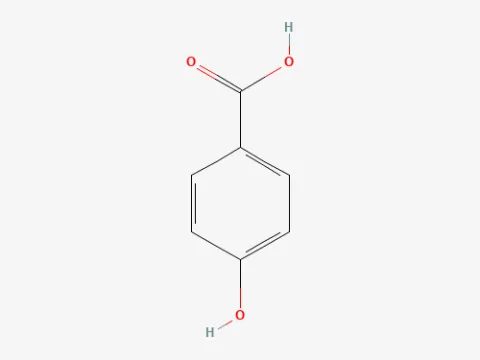
p-Hydroxybenzoic acid
Para-hydroxybenzoic acid and its derivatives belong to the class of simple phenolic compounds. In agricultural practice, they act as natural antioxidants and signaling molecules that activate the plant immune system.
What the section contains
p-Hydroxybenzoic acid
Their mechanism of action is based on the inhibition of pathogen enzymatic processes and the alteration of microorganism cell membrane permeability. Within complex formulations, these substances act as elicitors, stimulating the synthesis of phytoalexins in crop tissues.
These compounds can block the development of certain fungal infections by suppressing protein synthesis in pathogen spores. They are frequently included in tank mixtures to enhance the fungicidal effect of other active ingredients.
Furthermore, they exhibit significant allelopathic activity. In the soil environment, they can influence the germination of weed seeds, creating an unfavorable environment for their primary growth.
Due to their ability to regulate redox processes, they contribute to plant adaptation to environmental stress factors, such as drought or high temperatures.
Formulations based on this group of compounds are primarily used to control pathogenic mycoflora. They are effective against agents causing root rots, powdery mildew, and various types of leaf spots on vegetable crops.
Within integrated pest management, they are also used to suppress the activity of soil pathogens that affect the root systems of cereal crops during early vegetation.
The application of these substances is relevant for combating a wide range of phytopathogenic fungi, including species of the genera Fusarium and Rhizoctonia, which is critical for seedling protection.
Additionally, these compounds show activity against certain types of bacterial infections, limiting the spread of infection sites on the leaf surface.
They are often included in ornamental crop protection systems to prevent the development of molds that spoil the commercial appearance of products in greenhouse production.
Application rates depend on the concentration of the active ingredient in the formulation and the method of application. For prophylactic foliar treatments, low-concentration working solutions are typically used to ensure uniform coverage of the leaf blade.
During seed treatment, application rates are calculated based on the weight of the seed material to provide a protective barrier in the germination zone.
Timing of application is linked to critical plant development stages when the risk of pathogen infection is highest. Most often, this is the period of active tillering or the phase of the first true leaves formation.
In greenhouse conditions, treatments are conducted according to the regulations every 10–14 days, depending on the phytosanitary situation and air humidity levels.
It is important to observe the intervals between the last application and harvest, although many derivatives of this group are safe for humans and have minimal waiting periods.
The main limitation is the dependence of efficacy on soil acidity (pH), as under certain conditions, these compounds can rapidly degrade due to soil microbiota activity.
It is not recommended to exceed the prescribed dosages, as high concentrations of these phenolic acids can exhibit phytotoxicity, inhibiting the growth of the crops themselves.
When working with these preparations, it is necessary to avoid contact with skin and mucous membranes by using basic personal protective equipment according to the manufacturer's instructions.
Storage should be in a cool, dark place, as active components can undergo photodegradation when exposed to direct ultraviolet radiation.
Mixing with highly alkaline preparations is not permitted, as this can lead to the chemical neutralization of the active ingredient and the complete loss of its protective properties.