
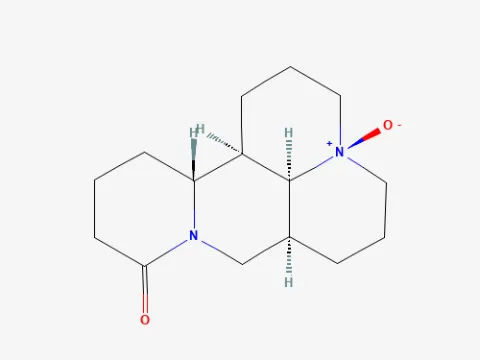
Oxymatrine
Oxymatrine is a quinolizidine alkaloid extracted from the roots of plants of the genus Sophora, notably Sophora flavescens. It is recognized as a potent biological pesticide, functioning as a contact and stomach poison against various agricultural pests.
What the section contains
Oxymatrine
The mode of action of oxymatrine involves interference with the nervous system of insects. By acting on the acetylcholinergic receptors, the substance disrupts the transmission of nerve impulses, which causes paralysis, cessation of feeding, and eventually leads to the death of the pest.
Oxymatrine is valued for its rapid biodegradation and minimal environmental impact. Unlike traditional synthetic insecticides, it leaves almost no toxic residues on crops, making it a highly desirable choice for Integrated Pest Management (IPM) programs.
The compound also exhibits a multi-target metabolic effect within insect cells, which helps in preventing the rapid development of resistance. This characteristic makes it a reliable tool for long-term pest management strategies in diverse agricultural environments.
Biological activity of oxymatrine is temperature-dependent. The substance is most effective in environments with moderate to high temperatures, where the penetration through the insect cuticle and uptake of the compound is optimized.
Oxymatrine is primarily used to control a wide range of sucking and chewing pests in vegetable crops, fruit orchards, and greenhouses. It has demonstrated high efficacy against soft-bodied insects and spider mites.
- Aphids
- Spider mites
- Whiteflies
- Thrips
- Lepidopteran larvae (early stages)
It is particularly effective against aphids and spider mites, which are often difficult to control with standard chemical methods. Its application helps in maintaining clean crops while preserving beneficial insects that live in the same area.
In fruit production, oxymatrine is utilized to manage leafrollers and codling moths. Since the substance is natural, it allows for pest control during the pre-harvest period, ensuring that the fruit remains safe for consumers.
Due to its selective nature, it is frequently integrated into biological control systems where it is used alongside natural predators, thus enhancing the overall ecological balance of the farmland.
The application rate of oxymatrine depends on the severity of the pest infestation and the type of crop. Typically, the concentration of the active ingredient in the spray solution ranges from 0.1% to 0.5%.
For best results, applications should be conducted during early morning or evening hours to avoid intense UV radiation. Sunlight can cause the degradation of the alkaloid, reducing its persistence on the plant surface.
The interval between treatments is usually 7 to 10 days. In cases of heavy infestation, a second application is often required to ensure that newly hatched larvae are also effectively targeted and suppressed.
To ensure maximum coverage, the use of adjuvants or spreaders is recommended. Proper wetting of both the upper and lower surfaces of leaves is crucial, as many pests, such as mites, prefer the underside of foliage.
The pre-harvest interval (PHI) for crops treated with oxymatrine is very short, often only a few days. This benefit allows farmers to maintain protection right until the moment of harvest without violating safety standards.
Oxymatrine should not be mixed with highly alkaline substances, as the resulting high pH can lead to the hydrolysis of the alkaloid, rendering it inactive. Always check compatibility before preparing a tank mix.
Proper storage is essential to maintain the efficacy of the product. It should be kept in a cool, dark place away from direct sunlight, as light exposure can cause chemical degradation over time.
Although the product is natural, personal protective equipment (PPE) is required during handling to avoid irritation of the skin, eyes, or respiratory tract, as with any concentrated plant extract.
It is important to remember that oxymatrine is not a "knockdown" agent in the same sense as synthetic organophosphates. It may take longer to observe a significant reduction in pest population levels.
Disposal of unused product and packaging must follow local environmental regulations. Prevent any leakage into waterways or soil, as oxymatrine may have adverse effects on aquatic invertebrates if released in high concentrations.