
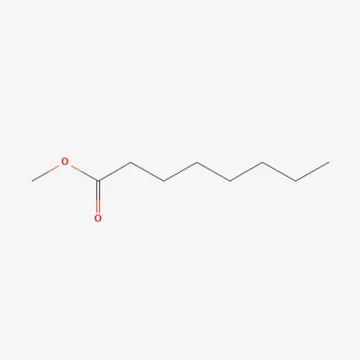
Methyl octanoate
Description
Mode of action
Methyl octanoate is an organic compound belonging to the fatty acid ester group. In modern agronomy, this substance plays a specific role as a selective attractant or a component of pheromone formulations.
Its mechanism of action is based on chemical communication between insects. The substance mimics natural volatile signals used by arthropods to find mating partners or oviposition sites.
When used in pheromone traps, methyl octanoate allows for effective attraction of pest adults to the source, making it possible to accurately determine population density in the field.
The advantage of this compound lies in its high selectivity. The effect is targeted exclusively at specific species without disrupting the biological balance in the agroecosystem or harming beneficial entomophages.
Unlike contact insecticides, the substance has no systemic or toxic effect on plants, functioning solely as a powerful monitoring and signaling tool for agronomists.
What it targets
This group of substances is primarily used to combat lepidopteran pests, including various species of fruit moths, leafrollers, and cutworms that infest fruit, berry, and vegetable crops.
Usage in traps allows for the control of insect migration in orchards, vineyards, and fields with intensive vegetable production, where preventing massive pest outbreaks is critical.
Due to its ability to attract males, methyl octanoate is also used in mating disruption techniques, which significantly reduces the probability of mating and decreases the natural growth of the pest population.
The substance works effectively in temperate climate conditions, maintaining activity both in open ground and in closed greenhouse complexes, ensuring a stable monitoring background.
Integrated use in plant protection programs helps to significantly reduce the number of pesticide applications by accurately planning the timing of treatments.
Rates and timing
Application rates are determined by the design of the pheromone traps and the density of dispensers placed per hectare of field area or orchard.
The timing of trap installation must strictly correspond to the flight periods of the target pest's adults, requiring a preliminary analysis of the crop's development phenology.
Usually, in intensive orchards, it is recommended to place 1 to 5 traps per hectare, with the replacement of active substance dispensers occurring every 4–8 weeks depending on weather conditions.
At high temperatures and intensive solar radiation, the rate of ether evaporation increases; therefore, the replacement interval may be shortened to maintain a stable scent concentration.
It is not recommended to violate placement regulations, as excessive dispenser density can lead to a "noise" effect, reducing the efficiency of insect attraction.
Restrictions
The substance is chemically stable but requires storage in a cool, dark place to prevent premature oxidation and loss of attractive properties.
When handling the component, it is necessary to follow standard personal hygiene measures: use gloves, avoid contact with mucous membranes, and avoid inhaling concentrated vapors.
Mixing the substance with aggressive chemicals that could neutralize its action or alter its chemical profile, making it undetectable to insects, is not permitted.
There are no pre-harvest interval restrictions for pheromone dispensers, as they do not come into contact with the fruits and do not penetrate plant tissues.
Disposal of used dispensers must be carried out according to local regulations regarding household or specialized waste management.
Status in the European Union
Not approved in the EU
- CAS number
- 111-11-5
- Approved from
- 01.09.2009
- Approval until
- 31.08.2024
- ADI
- Not appl.
- ARfD
- Not appl.
- AOEL
- Not appl.
EU status is for reference only and does not replace national registration in your country.