
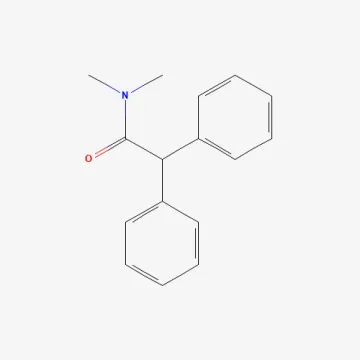
Diphenamid
Description
Mode of action
Diphenamid belongs to the amide chemical class. It acts as a systemic herbicide that is primarily absorbed by the root systems of germinating weeds.
Upon application, the substance effectively inhibits cell division within the meristematic tissues of both roots and shoots in sensitive plants.
The product exhibits high selectivity: crop plants are able to metabolize the active ingredient, thereby neutralizing its toxic effects during development.
The primary use of the compound is to suppress weeds before they emerge from the soil surface, providing a robust pre-emergence barrier.
The efficacy of the treatment is highly dependent on soil moisture, as water is required to activate the molecules of diphenamid for root uptake.
What it targets
Diphenamid provides effective control over a wide range of annual grasses and many broad-leaved weeds in various agricultural settings.
Targeted weeds include barnyard grass, annual bluegrass, foxtail, as well as several species of goosefoot and amaranth.
It is primarily utilized in vegetable production, specifically for crops like tomatoes, peppers, eggplants, cabbage, and in tobacco cultivation.
It is crucial to note that perennial weeds that propagate via rhizomes demonstrate significant resistance and are generally not controlled by this herbicide.
For the best results, consistent distribution of the product across the soil surface during pre-planting or immediately after seeding is essential.
Rates and timing
Application rates for diphenamid must be adjusted based on soil type: light sandy soils require lower doses to prevent injury to the emerging crops.
In heavy clay soils or soils with high organic matter, higher doses are necessary to ensure the active ingredient reaches the required concentration in the soil profile.
The optimal application strategy involves incorporating the product into the soil at a depth of 2–5 centimeters to protect it from degradation.
In irrigated farming, the efficacy of the herbicide is improved as the controlled moisture levels facilitate better uptake by emerging weed seedlings.
The product should not be applied post-emergence, as it functions strictly through soil contact and lacks foliar activity against existing weed growth.
Restrictions
A primary limitation is the potential for leaching into deeper soil profiles during heavy rainfall, which can decrease the overall protective period.
Use of diphenamid is discouraged in soils with extremely low humus content due to the elevated risk of phytotoxicity toward the protected crop.
Crop rotation plans must account for potential residual activity of the herbicide, ensuring safe intervals for sensitive subsequent crops.
Application is prohibited near water bodies and in water protection zones to prevent contamination and harm to aquatic organisms.
Personnel must strictly adhere to safety protocols, including the use of protective equipment to avoid inhalation, skin contact, and eye exposure.
Status in the European Union
Not approved in the EU
- CAS number
- 957-51-7
- Category (EU)
- HB - Herbicide
EU status is for reference only and does not replace national registration in your country.