

Active ingredient
Especially harmful
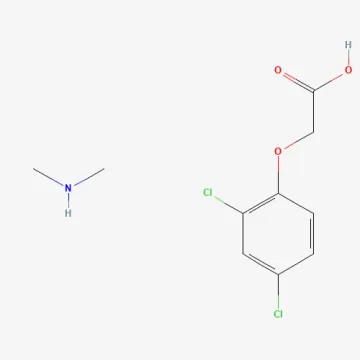
2,4-D dimethylamine salt
Description
Mode of action
2,4-D dimethylamine salt is a systemic herbicide belonging to the aryloxyalkanoic acid chemical family, widely used for selective control of broadleaf weeds.
The substance acts as a synthetic auxin mimic. Once absorbed by the plant foliage or roots, it disrupts normal growth processes by stimulating excessive and uncontrolled cell division.
This disruption causes the plant's vascular system to collapse, leading to characteristic symptoms such as twisting, curling of leaves, and stem thickening, eventually resulting in plant death.
As a salt formulation, it is characterized by high water solubility and significantly lower volatility compared to ester formulations, making it safer for use in sensitive areas.
The herbicide is translocated throughout the plant via the vascular system, reaching the meristematic tissues and effectively killing the weed from the inside out.
What it targets
The primary use of this herbicide is for selective weed control in cereal crops, such as wheat, barley, and oats, as well as in maize (corn) production.
It is highly effective against a wide range of annual and perennial broadleaf weeds, including various species of thistles, bindweed, lamb's quarters, and ragweed.
It is specifically chosen for its ability to clear broadleaf competition without damaging the grass family crops, provided it is applied at the correct growth stage.
Grass weeds are generally resistant to this compound, which means that while it cleans the field of broadleaf species, it does not control grassy infestations.
Proper weed identification and assessment of the growth stage are critical, as efficacy decreases significantly if the weeds are past their juvenile vegetative stage.
Rates and timing
For cereal crops, application is generally timed during the tillering stage, before the jointing stage, to ensure crop safety and maximum herbicide uptake.
Application rates typically range from 0.5 to 2.0 liters of formulated product per hectare, depending on the weed species present and the overall infestation density.
When used in corn, the treatment is best applied at the 3 to 5-leaf stage of the crop, with air temperatures maintained between 10°C and 25°C for best results.
Application should be avoided during periods of high humidity or immediately following rainfall to prevent wash-off and ensure the product adheres properly to the leaves.
Operators should use properly calibrated spray equipment to ensure even coverage and avoid overlapping, which could cause local crop stress or stunted growth.
Restrictions
The most important limitation is the extreme phytotoxicity toward sensitive broadleaf crops like vegetables, flowers, fruits, and sugar beets.
Drift management is crucial; spraying should not be conducted when wind speeds are high, as even minute amounts can cause severe injury to nearby susceptible vegetation.
Equipment cleaning is vital after application; if not properly decontaminated using specialized agents, residue can easily damage subsequent crops sprayed with the same unit.
Users must adhere to local environmental regulations regarding the protection of water bodies, as the salt can be mobile in certain soil types.
Personal Protective Equipment (PPE), including gloves, goggles, and respirators, is mandatory to prevent accidental exposure during the mixing and spraying processes.
Content graph
Connections · 2,4-D dimethylamine salt
Most often together:
Marketplace
Products · 14


2,4-D-star
ТОВ «Фабрика агрохімікатів», Черкаси, Україна
Herbicides
0
0
·
35
1 offer
7.31 €per 1 l
Buy


