
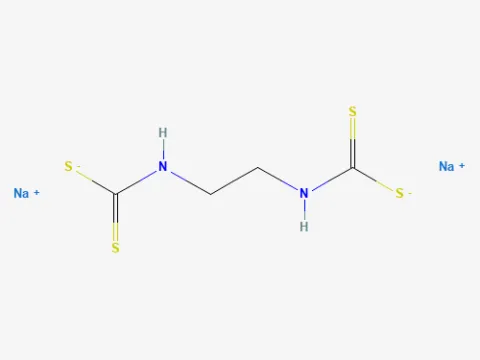
Nabam
Nabam belongs to the dithiocarbamate chemical class and is the sodium salt of ethylenebisdithiocarbamate. It is a contact fungicide with a broad spectrum of activity that actively suppresses the development of pathogens by blocking enzymatic processes within their cells.
What the section contains
Nabam
The mechanism of action is based on the interaction of the active component with sulfhydryl groups of amino acids and enzymes of fungal cells. This leads to the disruption of metabolism in the Krebs cycle and the inhibition of cellular respiration processes in parasitic fungi.
The preparation is characterized solely by protective action. It creates a thin chemical barrier on the surface of the plant, which prevents the germination of pathogen spores and prevents primary infection of crop tissues.
Nabam has high mobility in the form of aqueous solutions, but upon contact with air and moisture on the leaf surface, it undergoes chemical transformations. During the decomposition process, more stable derivatives are formed, providing a prolonged protective effect.
The efficacy of the preparation directly depends on the uniformity of leaf surface coverage. Since the substance does not possess systemic properties, it is essential to ensure high-quality wetting of all aerial parts of the plant during spraying.
The primary use of Nabam is to control fungal diseases such as late blight, downy mildew, scab, and various types of leaf spots. It demonstrates high activity against oomycetes.
The preparation is effectively used on vegetable crops, including tomatoes, potatoes, cucumbers, and onions, to prevent epiphytotics during the active growth phase. It also finds limited use in ornamental horticulture.
The active ingredient suppresses a wide range of soil-borne and seed-borne infections if used for pre-sowing treatment or soil drenching. This allows for the reduction of the infection load at the early stages of plant growth.
In field conditions, Nabam is often used in tank mixtures, as its impact on pathogens complements other types of fungicides, preventing the emergence of resistant strains of disease pathogens.
The list of controlled diseases also includes anthracnose and rust, making it a universal tool in anti-resistance programs for agricultural crop protection.
Application rates for the preparation vary depending on the crop type and the level of infection pressure, usually ranging from 1.5 to 3 kilograms of active ingredient per hectare. Precise dosage depends on the vegetative mass of the plant.
Spraying is carried out at intervals of 7 to 14 days, depending on weather conditions. With high humidity and temperatures favoring disease development, the frequency of treatments may be increased according to regulations.
It is recommended to apply Nabam at the early stages of the first disease symptoms. Preventive use significantly increases the overall efficiency of treatment and helps avoid significant yield losses.
When preparing the working solution, it is necessary to follow a strict dissolution sequence while ensuring constant stirring. It is not recommended to store the ready-to-use solution for more than a few hours before application.
Pre-harvest intervals must be strictly observed in accordance with regulatory documents to avoid the accumulation of residual amounts of the active ingredient in marketable produce.
Nabam is moderately hazardous to humans and warm-blooded animals, so standard personal protective equipment for skin, respiratory, and eye protection must be used when handling it.
The preparation is toxic to aquatic fauna and fish; therefore, it is strictly forbidden to discharge residues of the working solution into water bodies or near sources of drinking water.
With prolonged use on the same fields, there is a risk of accumulating decomposition products in the soil. Rotation with fungicides of other chemical classes is recommended to prevent the degradation of soil microflora.
It is not recommended to apply Nabam during periods of intensive bee activity, despite moderate toxicity, as aerosol exposure may cause irritation to insects.
Storage of the preparation should be carried out in dry, cool, and well-ventilated warehouse premises, protected from direct sunlight and moisture exposure, in tightly closed original packaging.