
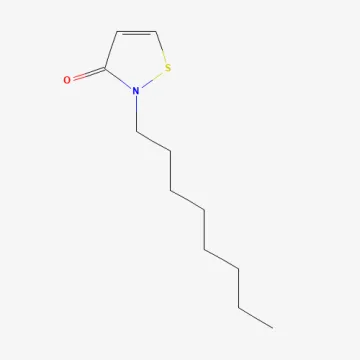
Octhilinone
Description
Mode of action
Octhilinone (2-octyl-2H-isothiazol-3-one) is an active substance belonging to the isothiazolinone class. It is a powerful biocide with a broad spectrum of antimicrobial activity.
The mechanism of action is based on the inhibition of metabolic processes in pathogen cells. The substance penetrates fungi and bacteria, disrupting their energy metabolism.
The active substance causes a rapid loss of enzymatic activity in target organisms. This leads to irreversible damage to vital cellular structures.
Due to its chemical structure, octhilinone effectively suppresses the growth of mycelium and spores. It prevents the reproduction of pathogenic microorganisms on various surfaces and in tissues.
The preparation is characterized by high stability in various environments. This provides a prolonged protective effect against colonization by unwanted microorganisms.
What it targets
In agronomy and related industries, octhilinone is used to control a wide range of fungal pathogens. It is particularly effective against mold fungi.
The substance actively suppresses the development of various types of bacteria. It is successfully used to prevent the spoilage of organic materials exposed to moisture.
The main spectrum of activity includes the control of microflora affecting agricultural products during storage. It is also used to protect seed material from surface infections.
It is used for the disinfection of storage systems and equipment. This helps to reduce the infectious load in warehouses and decrease crop losses due to rot.
It is effective against fungi that cause the degradation of wood, coatings, and other construction materials used in the agro-industrial complex.
Rates and timing
The application rates of octhilinone vary depending on the specific formulation of the product. Usually, the concentration of the active substance in ready-to-use mixtures ranges from 0.1% to 5%.
When treating premises or containers, solutions are prepared strictly according to the manufacturer's instructions. It is necessary to consider the surface area and the level of biological load.
Application timing depends on the target crop or the type of material being protected. In agronomy, it is important to follow regulations to avoid residues in commercial products.
Strictly regulated dosages are established for seed treatment. Exceeding the rates may negatively affect germination and seedling vigor.
When used as part of industrial biocides, it is important to follow concentration recommendations to achieve the required level of sterility.
Restrictions
Octhilinone is a moderately toxic compound for aquatic organisms. It is extremely important to prevent the concentrate from entering wastewater or natural water bodies.
When handling the substance, personal protective equipment must be used. It is recommended to use gloves, safety goggles, and respirators to prevent skin contact.
The product may cause irritation to skin and mucous membranes. In case of skin contact, immediately rinse the affected area with plenty of water.
Storage should be carried out in the original packaging in a dry place. Joint storage with food products or animal feed is not permitted.
When disposing of containers and solution residues, environmental regulations must be followed. Do not dispose of empty containers in general waste; use specialized collection points.
Status in the European Union
Not approved in the EU
- CAS number
- 26530-20-1
- Category (EU)
- FU - Fungicide
EU status is for reference only and does not replace national registration in your country.