
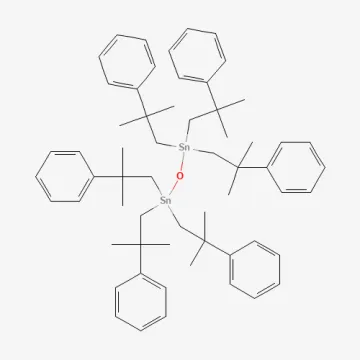
Fenbutatin oxide
Description
Mode of action
Fenbutatin-oxide is an organotin acaricide that acts primarily as an inhibitor of oxidative phosphorylation. By disrupting the energy production cycle within the cells of the pest, it effectively causes physiological exhaustion and death.
This active ingredient functions via contact action. Since it does not possess systemic properties, the success of the treatment is heavily dependent on the quality of coverage achieved during application to the foliage and target areas where mites reside.
A significant attribute of fenbutatin-oxide is its substantial residual activity. It remains effective on the treated plant surfaces for a long duration, offering an extended protective window that helps manage populations and suppress subsequent infestations.
The substance is particularly effective against active mobile stages of mites, including larvae and adult specimens. While it has limited ovicidal effects, it rapidly immobilizes active mites, which then cease feeding shortly after contact and die within several days.
Due to its specific mode of action, it is essential to ensure that the spray solution penetrates deep into the canopy. Good agricultural practice involves using sufficient water volumes to reach the underside of leaves and areas where pest density is highest.
What it targets
Fenbutatin-oxide is a specialized tool used predominantly for the control of plant-feeding mites, particularly the Tetranychidae family, commonly known as spider mites. It is a reliable solution for managing mite outbreaks in various agricultural settings.
It is widely deployed in orchards, protecting high-value crops such as apples, pears, peaches, and citrus fruits. It is also highly valued in viticulture to protect grapevines from mite-induced leaf damage, which can negatively impact photosynthesis and fruit quality.
In addition to fruit production, it is used on ornamental plants and in greenhouse environments. By controlling mite populations, the product prevents leaf chlorosis, stunted growth, and the overall decline in the aesthetic value of decorative plantings.
The substance is known for its relative selectivity, making it a valuable component in Integrated Pest Management (IPM) programs. It generally has a lower impact on beneficial predatory mites and insects, which allows for natural biological control to complement chemical measures.
Effective use of this acaricide helps maintain the integrity of the plant's leaf surface, ensuring optimal sugar accumulation and energy storage. This is vital for the overall health of the tree and its ability to produce consistent yields in subsequent years.
Rates and timing
Application rates for fenbutatin-oxide are determined by the crop type, tree canopy density, and the level of pest pressure. Standard field practice typically involves preparing solutions with specific concentrations of the active ingredient to ensure sufficient lethal dose exposure.
The timing of application should be guided by regular orchard scouting. Treatments are most effective when applied at the onset of mite population growth rather than waiting for heavy infestation levels, ensuring that all mites are exposed to the active substance.
To maximize efficacy, it is recommended to apply the product under favorable meteorological conditions, avoiding high-speed winds or intense midday heat, which can lead to rapid evaporation and uneven coverage on the leaf surface.
The number of seasonal applications is restricted to prevent unnecessary chemical load and the risk of developing resistance. Growers should adhere strictly to the manufacturer's label regarding the maximum number of treatments per growing season.
When preparing the tank mix, it is crucial to achieve thorough dispersion of the product. Utilizing modern spraying equipment, such as air-blast sprayers, ensures that the active substance covers both the upper and lower sides of the leaves effectively.
Restrictions
Safety is of utmost importance when handling fenbutatin-oxide. Operators must wear appropriate Personal Protective Equipment (PPE), including chemical-resistant gloves, eye protection, and respirators to prevent inhalation or dermal absorption during mixing and application.
The substance is highly toxic to aquatic life, including fish and aquatic invertebrates. Strict precautions must be taken to prevent spray drift or runoff into nearby water bodies, streams, or irrigation canals to protect the aquatic ecosystem.
Strict observance of the Pre-Harvest Interval (PHI) is mandatory. This period ensures that any residues on the fruit degrade to safe, legally defined levels before the produce is harvested and distributed to consumers, guaranteeing food safety standards.
To manage the potential development of mite resistance, it is advised to alternate the use of fenbutatin-oxide with acaricides belonging to different chemical classes with different modes of action. This strategy preserves the long-term utility of the chemical tool.
The product should be stored in its original container in a cool, dry, well-ventilated area, safely away from food, animal feed, and water supplies. Empty containers must be disposed of in accordance with local environmental and hazardous waste regulations.
Status in the European Union
Not approved in the EU
- CAS number
- 13356-08-6
- Category (EU)
- AC - Acaricide
- Approved from
- 01.06.2011
- Approval until
- 02.06.2014
- ADI
- 0.05 mg/kg bw/day
- ARfD
- 0.1 mg/kg bw
- AOEL
- Not appl.
EU status is for reference only and does not replace national registration in your country.