
Description
Mode of action
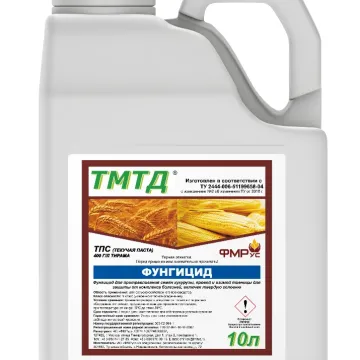
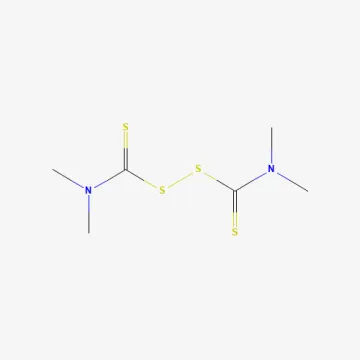
Thiram belongs to the dithiocarbamate chemical class and acts as a contact fungicide with protective properties. Its primary role is to suppress the activity of pathogenic fungi on the seed surface and within the soil.
The mode of action is based on the inhibition of enzymes containing copper or sulfhydryl groups. This process blocks the metabolic pathways within fungal cells, disrupting their respiration and protein synthesis.
The substance exhibits a strong fungistatic effect, effectively preventing the germination of pathogen spores. Due to its high contact activity, thiram establishes a reliable protective barrier surrounding the seeds.
The chemical does not penetrate deeply into the plant tissues, remaining primarily on the seed coat or near the root system. This makes it an ideal component for the initial protection of seedlings against soil-borne infections.
In modern agricultural practices, thiram is often combined with systemic fungicides to expand the spectrum of activity and ensure prolonged protection of young plants during critical growth stages.
What it targets
This substance is used to combat a wide range of pathogens that cause seed rot, seedling blight, and various leaf spots. It is effective against the majority of soil-borne diseases.
The primary targets for thiram include species of Fusarium, Pythium, Rhizoctonia, and Phoma, which are responsible for damping-off and seedling mortality.
Thiram is commonly used in seed treatments for cereals, corn, sunflower, legumes, and vegetable crops to prevent rotting in cold and damp soil conditions.
Beyond seed protection, thiram may be used for soil treatment in greenhouses or nurseries where reducing the infectious background before sowing or transplanting is necessary.
The product is also effective against fungi of the Alternaria genus, helping to protect crops from early infections affecting cotyledons and primary leaves.
Rates and timing
Application rates vary depending on the crop, soil pathogen pressure, and the specific method of application. Rates are generally calculated based on seed weight or the target area.
For cereal seed treatments, the dosage of the active ingredient typically ranges from 1.5 to 2.5 liters per ton of seeds, depending on the specific formulation and concentration.
Treatment timing is generally scheduled during the preparation of seeds, either several weeks before sowing or just prior to planting to ensure maximum efficiency.
For vegetable crops, application into the soil at the time of sowing is sometimes permitted according to specific product labels, provided that dosage guidelines are strictly followed to prevent phytotoxicity.
It is essential to strictly adhere to the manufacturer's recommendations provided on the label to ensure uniform seed coverage and avoid potential damage caused by excessive active ingredient concentration.
Restrictions
Thiram is classified as a moderately hazardous substance; therefore, it is mandatory to wear appropriate personal protective equipment for skin, eyes, and respiratory protection during handling.
The product is toxic to aquatic organisms, so it is strictly forbidden to allow any runoff into water bodies, drainage channels, or water supply systems.
Treated seeds must never be used for human consumption or as animal feed, as the substance retains its toxicity for an extended period.
There are typically no major crop rotation restrictions, as thiram degrades relatively quickly in the soil, but residual effects of other components in tank mixtures should be considered.
Storage must take place in dry, cool facilities out of reach of children and pets, in full compliance with safety protocols for agricultural chemical storage.
Content graph
Connections · Thiram
Most often together:
Marketplace
Products · 42

Vitavax 200 FF
Crompton (Uniroyal Chemical) Registration Limited
Fungicides
1
0
·
4.1K
13 offers
5.21 €per 1 l
Buy


Vispar
Ф.Суперус Ко ., Лтд., Гонг-Конг, Шанхай, Китай.
Fungicides
0
0
·
894
3 offers
2.03 €per 1 l
Buy


Vesper w.c.s.
Ф.Суперус Ко ., Лтд., Гонг-Конг, Шанхай, Китай.
Fungicides
0
0
·
56
1 offer
55.41 €per pack
Buy


TMTD V.S.K. Fungicide for Seed Treatment
ЗАТ Фірма Август, Росія.,селище Вурнари,
Fungicides
0
0
·
47
1 offer
1 587.96 €per pack
Buy


Vencedor
Jiangsu SevenContinent Green Chemical Co., Ltd.
Fungicides
0
0
·
46
32 offers
1.34 €per 1 l
Buy

Vipsar w.s.c.
Ф.Суперус Ко ., Лтд., Гонг-Конг, Шанхай, Китай.
Fungicides
0
0
·
44
1 offer
55.41 €per pack
Buy


Stirax V.S.K.
Санрайз Кемікалз Ко. Лтд., Шанхай, Китай
Fungicides
0
0
·
39
1 offer
10.34 €per 1 l
Buy


Vencedor
Jiangsu SevenContinent Green Chemical Co., Ltd.
Fungicides
0
0
·
37
1 offer
7.17 €per 1 l
Buy

Granivit v.s.k.
China Chemical Industrial & Rice Co. Ltd
Fungicides
0
0
·
36
1 offer
0.6 €per 1 l
Buy

Rekord
ТОВ «Фабрика агрохімікатів», Черкаси, Україна
Fungicides
0
0
·
36
4 offers
13.09 €per 1 l
Buy


