

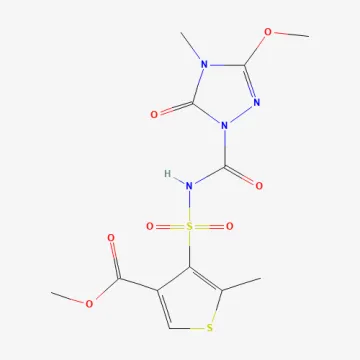
Active ingredient
Especially harmful
Thiencarbazone-methyl
Description
Mode of action
Thiencarbazone-methyl is an active ingredient belonging to the sulfonylaminocarbonyltriazolinone chemical class, functioning as a highly effective systemic herbicide.
The mode of action involves the inhibition of the acetolactate synthase (ALS) enzyme, which is essential for the biosynthesis of branched-chain amino acids such as leucine, isoleucine, and valine.
By disrupting protein synthesis, the compound halts cell division in sensitive weeds, leading to a rapid cessation of growth and subsequent plant death.
The substance is absorbed both through the foliage and the root system, providing a robust dual-action mechanism that ensures broad-spectrum weed control.
Following uptake, it is translocated throughout the plant via the xylem and phloem, accumulating in the meristematic tissues to deliver a lethal effect on susceptible weed species.
What it targets
Thiencarbazone-methyl is primarily used to control a wide range of annual broadleaf weeds and certain grass species in corn cultivation.
It is particularly effective against major weed threats, including Amaranthus species, Chenopodium album, and various Polygonum species that commonly compete with crops for nutrients.
The compound provides long-lasting residual soil activity, which helps prevent secondary flushes of weeds, thereby maintaining a cleaner field throughout the growing season.
Due to its high selectivity, it allows for safe application in corn, helping to secure yield potential by minimizing weed interference during the early development stages.
It is often integrated into tank-mix programs with other herbicides to expand the spectrum of activity and address localized resistance challenges.
Rates and timing
Application rates are determined by weed pressure, growth stage, and soil conditions, with treatments typically timed between the 2-leaf and 6-leaf stages of corn development.
When used in combination programs, the dosage of thiencarbazone-methyl is adjusted based on the specific partner herbicides and the anticipated weed control goals.
Achieving optimal efficacy requires applying the herbicide when weeds are in their active growth phase, specifically in the cotyledon to 2-leaf stage.
Uniform spray coverage is critical for success; therefore, it is essential to calibrate spraying equipment and ensure proper nozzle selection for consistent droplet distribution.
Application should occur under favorable environmental conditions to maximize absorption and translocation while minimizing the risk of off-target drift.
Restrictions
When incorporating thiencarbazone-methyl into a crop management plan, it is important to consider rotational crop restrictions due to potential soil residual effects.
Applications should be avoided on crops under environmental stress, such as drought, extreme cold, or pest damage, as these conditions may increase the risk of phytotoxicity.
Care must be taken when mixing with organophosphate insecticides, as these combinations can sometimes lead to crop injury under specific field conditions.
Proper cleaning of spray tanks and equipment after use is mandatory to prevent cross-contamination that could affect subsequent applications on sensitive crops.
All users must follow standard safety guidelines, wear personal protective equipment, and adhere to local regulatory requirements for handling and disposing of chemical products.
Content graph
Connections · Thiencarbazone-methyl
Most often together:
Marketplace
Products · 11


