

Description
Mode of action
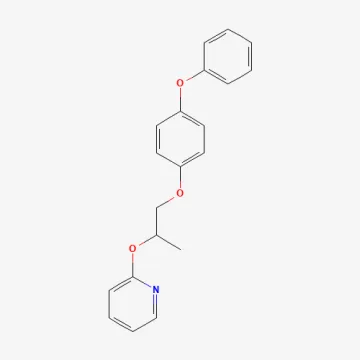
Pyriproxyfen is a potent synthetic analog of the insect juvenile hormone, belonging to the pyridine-based chemical class. It acts as an Insect Growth Regulator (IGR), specifically designed to disrupt the life cycle of target pests.
The compound mimics the natural hormone that prevents insects from maturing into adults. By interfering with the physiological processes of molting and metamorphosis, it ensures that larvae or nymphs are unable to complete their development, leading to their death.
A key biological effect of pyriproxyfen is its high sterilization activity against adult insects. When exposed to the substance, adult females lay non-viable eggs, effectively halting the reproductive cycle and crashing the population growth.
It exhibits strong translaminar activity, meaning the chemical is absorbed into the leaf tissues shortly after application. This property allows it to reach pests hiding on the underside of leaves without requiring direct contact during the spray process.
Pyriproxyfen is known for its extended residual stability in the field. This durability provides long-lasting protection, which significantly reduces the frequency of application compared to contact-based insecticides.
What it targets
This substance is highly effective against a broad range of homopteran and coleopteran pests. It is particularly valued for its efficacy against various species of whiteflies, which are major threats in greenhouse horticulture.
It is widely used to manage infestations of scale insects and mealybugs, which are notorious for damaging orchards and ornamental plants. Pyriproxyfen effectively stops their development at the vulnerable larval stage.
The compound is standard in integrated pest management (IPM) for high-value vegetable crops such as tomatoes, cucumbers, and peppers. It is also successfully used in citrus and pome fruit orchards to control psyllids and aphids.
Additionally, it provides control over certain types of thrips and mite species, suppressing their outbreaks before they cause significant economic damage. Its specificity makes it a reliable tool for professional pest management.
- Whiteflies (Bemisia tabaci, Trialeurodes vaporariorum)
- Scale insects (Coccidae, Diaspididae)
- Mealybugs (Pseudococcidae)
- Psyllids and Aphids (Psyllidae, Aphididae)
Rates and timing
Timing is critical when applying pyriproxyfen; for maximum efficacy, it should be applied at the onset of pest colonization, targeting early larval stages. Once the pest reaches the late nymphal or adult stage, the effect may be significantly reduced.
Application rates depend on the crop type and the density of the pest population. Generally, agricultural formulations require approximately 0.5 to 1.2 liters of product per hectare, ensuring thorough coverage of the foliage.
The spray application must cover the entire plant surface. Because many pests dwell in the lower canopy or on the undersides of leaves, high-volume spraying is recommended to achieve the necessary concentration for optimal juvenile hormone disruption.
To ensure sustainable pest management, it is advised to limit applications to 2-3 per season. Excessive use of the same chemical group increases the risk of developing resistance within the insect population.
Pre-harvest intervals (PHI) must be strictly observed as per local regulations and product labels. This ensures that any residual traces of the substance have dissipated before the crop is harvested and sent for distribution.
Restrictions
Safety equipment is mandatory during the handling and application of pyriproxyfen. Workers must wear appropriate personal protective equipment (PPE), including gloves, goggles, and respirators, to prevent exposure through skin or inhalation.
Although it is generally considered safer for many non-target beneficial insects than broad-spectrum organophosphates, it should be avoided during peak blooming periods to protect pollinators like honeybees.
Pyriproxyfen should not be used exclusively throughout the entire growing season. Farmers must rotate it with insecticides that possess different modes of action to prevent the evolution of resistance in pest populations.
Environmental care must be taken to prevent runoff into aquatic systems. Buffer zones should be maintained when applying near water bodies or sensitive wildlife areas to avoid potential contamination.
Storage should be handled according to local agricultural standards, keeping the substance in its original, sealed container in a cool, dark, and well-ventilated area, safely away from unauthorized personnel or animals.
Content graph
Connections · Pyriproxyfen
Most often together:
Marketplace
Products · 4


