

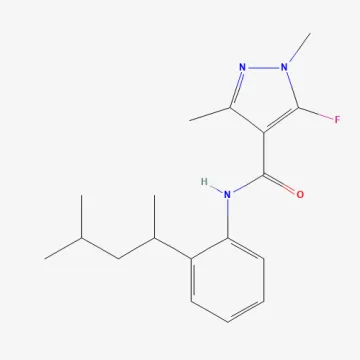
Description
Mode of action
Penflufen is a systemic fungicide belonging to the pyrazole-carboxamide chemical class, widely utilized for the protection of crops against soil-borne pathogens.
The core mechanism of action involves the inhibition of the succinate dehydrogenase enzyme (Complex II) within the fungal mitochondrial respiratory chain.
By disrupting the energy metabolism of the pathogen, penflufen effectively halts mycelial growth and prevents the infection from colonizing the plant tissues.
The substance demonstrates strong systemic properties, allowing it to move effectively through the plant's vascular system to protect developing roots and shoots.
Its unique chemical structure enables it to maintain a stable protective film on the surface of seeds and tubers, ensuring long-lasting defense against early infections.
What it targets
Penflufen is primarily targeted at controlling a variety of pathogenic fungi that inhabit the soil or are seed-borne during the germination process.
It is highly effective against Rhizoctonia solani, which causes severe damage in potato production, such as stem canker and black scurf.
Additionally, the compound exhibits excellent efficacy in suppressing various species of smut fungi affecting cereal grains and other agricultural crops.
It also serves to protect seeds and seedlings against seed decay and damping-off, ensuring a healthy and uniform emergence of the crop stand.
By preventing these primary infections, penflufen helps maintain the plant's vigor, allowing it to overcome early-season biotic stresses.
Rates and timing
Application rates for penflufen vary depending on the target crop, the degree of pathogen pressure in the field, and the specific product formulation.
In potato cultivation, it is often applied via in-furrow spraying at planting time to create a protected zone around the developing tuber and sprout.
For cereal grains, the active ingredient is applied as a seed treatment to ensure that each kernel is thoroughly covered with the fungicidal layer.
Adherence to label-specific dosage requirements is critical to ensure optimal disease control while avoiding any potential phytotoxicity to the seedlings.
Timing is essential, as the protective window must cover the most vulnerable early stages of the plant's development to maximize the yield potential.
Restrictions
Operators must adhere strictly to personal safety protocols, including wearing protective clothing and respirators when handling concentrated products.
Care must be taken to prevent the contamination of water sources, as penflufen can have adverse effects on aquatic life if allowed to enter streams or ponds.
Empty containers and leftover product must be disposed of in accordance with local environmental regulations to minimize ecological impact.
Storage should be in a cool, dry place, away from food and feed, and inaccessible to unauthorized individuals or animals.
To mitigate the risk of fungal resistance, it is advisable to rotate penflufen with fungicides that utilize different modes of action throughout the crop cycle.
Content graph
Connections · Penflufen
Most often together:
Marketplace
Products · 3
