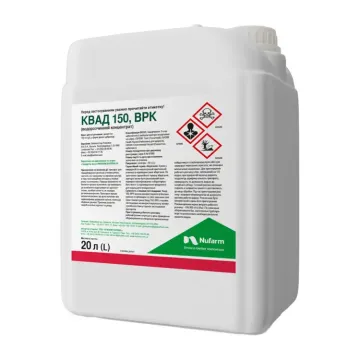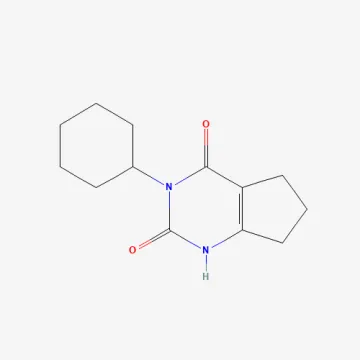
Description
Mode of action
Lenacil belongs to the uracil chemical class and functions as a highly effective selective systemic herbicide used in agricultural plant protection.
The primary mode of action involves the inhibition of photosynthesis in target weeds. Lenacil acts by blocking electron transport within photosystem II, effectively starving the weed plant.
This compound acts mainly as a soil-applied herbicide. It is absorbed by the roots of germinating weeds, making it essential to apply it when the soil is moist for optimal activity.
Once absorbed, the substance halts the weed's growth, leading to chlorosis and eventual necrosis of the plant tissues, preventing the weed from successfully establishing.
The selectivity of Lenacil is achieved because crops like sugar beet can metabolize the compound, breaking it down into non-toxic substances within their own biological systems.
What it targets
Lenacil is widely used to control a broad spectrum of annual broad-leaved weeds that typically infest sugar beet fields during the early stages of crop development.
Target weed species often include common lambsquarters, knotweed species, common chickweed, shepherd's purse, and hemp-nettle, which are common problems in root crop cultivation.
The herbicide also shows partial activity against certain annual grass weeds, although it is often used in combination with other active ingredients for complete weed control programs.
The efficacy of Lenacil is highly dependent on environmental conditions, particularly soil moisture, which ensures the substance remains in the soil solution where roots can take it up.
- Common lambsquarters (Chenopodium album)
- Knotweed (Polygonum spp.)
- Common chickweed (Stellaria media)
- Shepherd's purse (Capsella bursa-pastoris)
- Hemp-nettle (Galeopsis tetrahit)
Rates and timing
Application rates of Lenacil are strictly determined by the soil type and its organic matter content. Lighter, sandy soils require lower doses to prevent potential crop phytotoxicity.
In heavier soils or those high in organic matter, higher doses are necessary because the soil particles bind a portion of the active ingredient, reducing its bioavailability.
The product is typically applied as a pre-emergence treatment, creating a chemical barrier on the soil surface that intercepts weeds as they begin to germinate.
Timing is crucial: application is usually performed shortly after planting to ensure the active ingredient is in place before both crop and weed emergence.
Lenacil is frequently incorporated into integrated weed management programs, often applied in tank mixes with other herbicides to broaden the spectrum of controlled species.
Restrictions
Users must consider potential rotational crop restrictions, as residual activity can occur depending on the application rate, soil conditions, and subsequent environmental factors.
Mechanical operations, such as inter-row cultivation, should be avoided shortly after application to maintain the integrity of the treated soil surface layer.
Safety protocols must be strictly followed when handling Lenacil; operators must wear appropriate personal protective equipment (PPE) to avoid skin, eye, and respiratory exposure.
Environmental care is paramount; it is strictly prohibited to dispose of herbicide residues or equipment washings into water bodies, drainage systems, or near drinking water sources.
The herbicide should be stored in its original labeled packaging in a dry, well-ventilated, and secure facility, kept away from food, beverages, and animal feed.
Content graph
Connections · Lenacil
Most often together:
Marketplace