

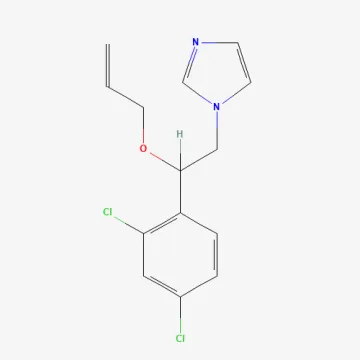
Description
Mode of action
Imazalil is a powerful systemic fungicide belonging to the imidazole chemical class. It is widely recognized for its dual role as a curative and preventative agent, effectively targeting fungal pathogens through both surface and systemic action within treated seeds.
The primary mechanism of action involves the inhibition of ergosterol biosynthesis within fungal cells. Ergosterol is a vital structural component of fungal cell membranes, and its depletion causes significant membrane instability, leading to the disruption of fungal growth and the eventual death of the pathogen.
Due to its systemic properties, Imazalil is absorbed by the seed and translocated into the developing seedling. This provides a crucial protective barrier during the early stages of plant development, which is when crops are most vulnerable to soil-borne diseases.
This substance is highly valued for its ability to persist in plant tissues, offering extended protection against fungal invasion. Its efficacy remains high even under diverse soil conditions, making it a reliable component in integrated pest management programs.
Furthermore, Imazalil is effective against pathogen strains that have developed resistance to other common fungicide groups, such as benzimidazoles. This makes it a critical tool for maintaining the efficacy of chemical crop protection programs.
What it targets
The primary application of Imazalil is the control of helminthosporium root rot, a devastating disease affecting cereal crops. By treating seeds with Imazalil, growers can significantly reduce the incidence of root and foot rot, promoting better plant establishment.
The fungicide is highly effective against various seed-borne molds, including species of Aspergillus, Penicillium, and Mucor. Protecting seeds from molding is essential for preserving germination vigor, especially when planting in cold or moist soil conditions.
Imazalil also plays a significant role in managing fusarium-based infections that can devastate crop stands. It prevents seedling blight and root rot, ensuring a more uniform and vigorous plant growth across the field.
In addition to seed treatment, Imazalil is frequently used for post-harvest protection of fruits, such as citrus and apples. It prevents the development of storage rots, significantly reducing waste during shipping and long-term storage.
- Helminthosporium root rot
- Fusarium root rot
- Seed mold
- Net blotch of cereals
- Post-harvest fruit decay
Rates and timing
Application rates for Imazalil vary significantly based on the crop type, the specific formulation of the product, and the target pathogen density. Typical rates for seed treatment range from 0.1 to 0.5 liters per ton of seed, depending on professional recommendations.
The treatment process requires high-precision machinery to ensure uniform coverage across every seed surface. Proper calibration of equipment is essential to achieve the desired protective result and to avoid overdosing or underdosing the seeds.
Treatment can be carried out well in advance of sowing, provided the seeds are stored under proper conditions. Pre-treating seeds allows for better logistical planning during the busy spring planting season and ensures that all seeds are ready for immediate use.
Imazalil is often formulated as part of a multi-active ingredient cocktail. Combining it with other fungicides, such as triazoles or phenylpyrroles, creates a synergistic effect that broadens the spectrum of protection against various fungal and soil-borne threats.
Maintaining the correct temperature and moisture levels during the treatment process is crucial. Proper storage conditions after application are also vital to maintain the active ingredient's stability on the seed surface.
Restrictions
Imazalil is classified as having moderate toxicity to humans and mammals. It is essential to strictly follow all safety protocols, including wearing appropriate personal protective equipment (PPE) such as respirators, chemical-resistant gloves, and goggles when handling the concentrate.
The substance can cause irritation to the eyes and respiratory system. In case of accidental contact, immediate washing with large amounts of water is required, and medical advice should be sought if irritation persists.
Environmental safety is a key concern, as Imazalil is toxic to aquatic organisms. The disposal of leftover product, cleaning water from equipment, or empty containers into waterways or drainage systems is strictly prohibited.
Store the product in a cool, dry place away from direct sunlight and keep it locked securely, out of reach of children and unauthorized personnel. Always keep the product in its original packaging to ensure correct labeling and safe handling.
After finishing seasonal work, all application equipment must be thoroughly cleaned. Dispose of any empty chemical containers in accordance with local environmental regulations and agricultural waste management standards.
Regulatory
Status in the European Union
Approved in the EU
- CAS number
- 35554-44-0
- Approved from
- 01.01.2012
- Approval until
- 31.05.2027
- ADI
- 0.025 mg/kg bw/day
- ARfD
- 0.05 mg/kg bw
- AOEL
- 0.05 mg/kg bw/day
Hazard classification (CLP)
Acute Tox. 3 - H301Acute Tox. 4 - H332Aquatic Chronic 1 - H410Carc. 2 - H351Eye Dam. 1 - H318
EU status is for reference only and does not replace national registration in your country.
Content graph
Connections · Imazalil
Most often together:
Marketplace
Products · 38


Ultrasil Duo t.c.s.
«Ред Сан Груп Корпорейшн, Лтд.,Китай
Fungicides
0
0
·
65
5 offers
2.91 €per 1 l
Buy


Rancona I Mix
Аріста ЛайфСайенс С.А.С., Ногер, Франція
Fungicides
0
0
·
36
1 offer
19.03 €per 1 l
Buy

Spaider Ks
Фадер Альянс Лтд., Великобританія (Fader Alliance Ltd., England) на заводах Нідерландів, Польщі
Fungicides
0
0
·
36
2 offers
3.25 €per 1 l
Buy


ULTRASIL DUO
ТОВ «Фабрика агрохімікатів», Черкаси, Україна
Fungicides
0
0
·
31
1 offer
15.28 €per 1 l
Buy


Alpha-Protruynik
«Юнісіті Ентерпрайсіс Л.П.», Единбург, Великобританія
Fungicides
0
0
·
38
No offers
—
Details


