

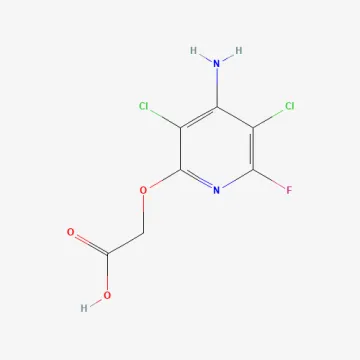
Description
Mode of action
Fluroxypyr is a systemic, selective herbicide that belongs to the pyridine carboxylic acid chemical family and is widely used for effective weed management.
The herbicide is primarily absorbed through the foliage of weeds and is then rapidly translocated throughout the plant system to the sites of active growth.
Its mode of action mimics the effects of auxins, which are natural plant growth hormones, causing severe physiological disruption and uncontrollable growth.
This disruption leads to the characteristic twisting, curling, and malformation of leaves and stems shortly after the application of the product.
The plant eventually exhausts its nutritional resources and perishes, with the total death of sensitive weeds occurring within one to three weeks.
What it targets
Fluroxypyr is specifically designed to control a broad spectrum of annual and perennial broadleaf weeds in cereal crops and maize fields.
It is widely recognized as the most effective solution for combating cleavers (Galium aparine), even when the weeds have reached an advanced growth stage.
The product is also highly effective against field bindweed, common chickweed, black bindweed, and various species of knotweeds that compete with crops.
Due to its selective properties, it effectively eliminates weeds without causing phytotoxicity to major cereal crops or maize plants.
- Galium aparine (Cleavers)
- Convolvulus arvensis (Field bindweed)
- Stellaria media (Common chickweed)
- Fallopia convolvulus (Black bindweed)
- Chenopodium album (Common lambsquarters)
Rates and timing
The typical application rate for fluroxypyr products ranges between 0.3 and 0.8 liters per hectare, depending on the weed species and growth stage.
In winter and spring cereals, the optimal application window is from the tillering stage up to the flag leaf development of the crop.
For maize, application is recommended when the crop is in the 3- to 7-leaf stage, ensuring weeds are actively growing to maximize absorption.
Fluroxypyr is frequently mixed with other herbicides, such as MCPA or sulfonylureas, to broaden the spectrum of controlled weed species in a single pass.
To ensure high performance, it is crucial to apply the herbicide under favorable conditions, typically between +10°C and +25°C, avoiding extreme drought periods.
Restrictions
A notable limitation of fluroxypyr is its lack of residual soil activity, meaning it does not prevent the germination of new weed seeds after the application.
Application should be avoided if the crop is under stress from nutrient deficiency, pest infestation, or adverse weather conditions, as this may reduce effectiveness.
Operators must take precautions to prevent spray drift onto sensitive neighboring crops, including legumes, sugar beets, and oilseed rape, to avoid yield losses.
Strict adherence to the pre-harvest interval (PHI) is required to ensure that herbicide residues in the final grain products are within safe limits.
The compound is biodegradable and breaks down relatively quickly in soil, allowing for flexible crop rotation planning without carry-over risks for following crops.
Content graph
Connections · Fluroxypyr
Most often together:
Marketplace
Products · 33

Tomigan 250
F.A.GAN Chemical Manufacturers Ltd. Israel, member
Herbicides
0
0
·
1.6K
5 offers
20.14 €per 1 l
Buy


Barclay Harler
Barclay Chemicals Manufacturing Company
Herbicides
0
0
·
59
1 offer
8.32 €per 1 l
Buy


STARNE@ Premium 330 EC
Доу АгроСайенсіс С.А.С., Друзенхайм, Франція
Herbicides
0
0
·
52
4 offers
6.86 €per 1 l
Buy

Stefarane, CE (fluroxypyr, 333 g/l)
ДДЕ Фарм АГ, Тризен, Ліхтенштейн
Herbicides
0
0
·
49
2 offers
17.62 €per 1 l
Buy


Stefarane, EC (fluroxypyr in the form of methylheptyl ester, 333 g
ДДЕ Фарм АГ, Тризен, Ліхтенштейн
Herbicides
0
0
·
35
1 offer
25.49 €per 1 l
Buy


Apton Duo SE, SE, herbicide
Rotam Agrochemical Company Limited
Herbicides
0
0
·
61
No offers
—
Details


