

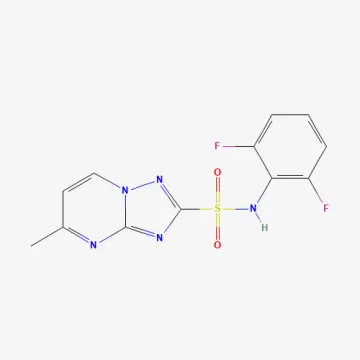
Description
Mode of action
Flumetsulam belongs to the triazolopyrimidine sulfonamide chemical class. It acts as a systemic herbicide that is rapidly absorbed by weed foliage and root systems, followed by active translocation throughout the plant.
The mode of action is based on the inhibition of the acetolactate synthase (ALS) enzyme. Blocking this enzyme disrupts the synthesis of essential amino acids, specifically valine, leucine, and isoleucine.
As a result of metabolic interference, weed growth ceases within hours of application. Visible damage symptoms, such as chlorosis and necrosis of growing points, appear within a few days.
Complete mortality of susceptible weed species usually occurs within 2 to 3 weeks after application. The speed of this process is highly dependent on weather conditions and the active growth of the plants at the time of spraying.
The substance exhibits high selectivity toward crops, which possess the capability to rapidly metabolize the herbicide into non-toxic compounds.
What it targets
The active ingredient is effective against a wide range of annual and perennial broad-leaved weeds. It shows particular activity against species that have developed resistance to other herbicide classes.
- Chenopodium album (Common lambsquarters)
- Amaranthus retroflexus (Redroot pigweed)
- Capsella bursa-pastoris (Shepherd's purse)
- Fumaria officinalis (Common fumitory)
- Cirsium arvense (Canada thistle)
The application of this product allows for effective suppression of weed vegetation during early developmental stages, which is critical for preventing competition with the main crop.
The product's efficacy is maintained even when weeds are present at the 2–4 true leaf stage. More advanced growth stages of weeds can significantly reduce sensitivity to the active ingredient.
Rates and timing
Flumetsulam is most frequently used in tank mixtures to broaden the spectrum of control. Application rates vary significantly depending on the specific formulation and the crop being treated.
In corn and soybean fields, application is typically performed during early weed growth stages. The optimal temperature range for application is between +8 and +25 degrees Celsius.
It is essential to ensure uniform coverage of the spray solution across all weed surfaces. The use of high-quality nozzles and strict adherence to application protocols are key to achieving high efficacy.
The herbicide can be applied both pre-emergence and post-emergence, according to the label requirements of specific commercial products containing flumetsulam.
Restrictions
There are crop rotation restrictions to consider, as the active ingredient may persist in the soil under certain environmental conditions. Required waiting periods before planting subsequent crops must be strictly observed.
Application is generally discouraged on soils with low organic matter content and very high pH levels, as these conditions can delay the natural degradation of the herbicide.
Personal protective equipment for skin and respiratory protection should always be used during handling. Avoid spray drift toward adjacent fields containing sensitive crops.
Do not contaminate water bodies with product residues or cleaning waste. Storage must be performed in original containers, kept away from food, drink, and animal feed.
Regulatory
Status in the European Union
Not approved in the EU
- CAS number
- 98967-40-9
EU legislation
EU status is for reference only and does not replace national registration in your country.
Content graph
Connections · Flumetsulam
Most often together:
Marketplace
Products · 32


Derbi 175
Доу АгроСайенсіс САС, Друсенхайм, Франція
Herbicides
0
0
·
52
2 offers
139.47 €per 1 l
Buy


Petra, WG
Доу АгроСайенсіс С.А.С., Друзенхайм, Франція
Herbicides
0
0
·
40
1 offer
154.2 €per 1 l
Buy

Ksior, KS, herbicide
ТОВ «Франдеса» , Республіка Білорусь
Herbicides
0
0
·
37
1 offer
48.58 €per pack
Buy

Flumet, WG, herbicide (flumetsulam, 800 g/kg)
Jiangsu Agricoem Laboratory Co., Ltd.
Herbicides
0
0
·
33
6 offers
98.59 €per 1 l
Buy

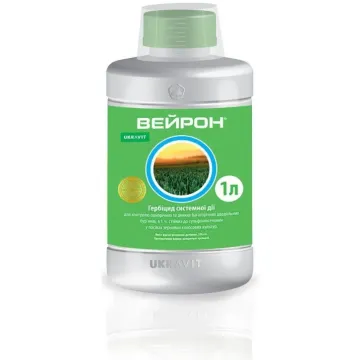
Weiron, KS (flumetsulam, 120 g/l + florasulam, 80 g/l)
ТОВ «Фабрика агрохімікатів», Черкаси, Україна
Herbicides
0
0
·
31
1 offer
65.15 €per 1 l
Buy


Forzat BT, CS, herbicide
IN FORS CHEMICAL, Private Enterprise
Herbicides
0
0
·
30
No offers
—
Details
