

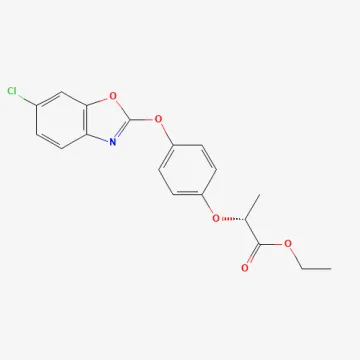
Description
Mode of action
Fenoxaprop-P-ethyl is a systemic post-emergence herbicide belonging to the aryloxyphenoxypropionate chemical class. It is primarily absorbed through the foliage of weed plants.
Once absorbed, the active ingredient is translocated throughout the plant and reaches the meristematic tissues. It inhibits the enzyme acetyl-CoA carboxylase, which is vital for fatty acid synthesis.
The inhibition of lipid synthesis leads to the cessation of cell membrane development, resulting in the rapid death of the plant's growing points.
Symptoms of herbicide activity include chlorosis and necrosis of the leaves, which become visible within a week after treatment depending on environmental factors.
The selectivity of this substance is based on the ability of the crop to rapidly metabolize the herbicide into inactive components, while target weeds cannot.
What it targets
The herbicide is effective against a wide range of annual grass weeds including Avena fatua (wild oat), Alopecurus myosuroides (black-grass), and Echinochloa crus-galli (barnyard grass).
It is widely used in cereal crops such as wheat, rye, and barley, providing selective control without damaging the crop foliage.
Rates and timing
Timing of application is critical: the most effective control is achieved when target weeds are in the early growth stages, specifically between the 2nd leaf and the tillering stage.
Application rates are determined by the weed species and growth stage, usually ranging between 0.4 and 1.2 liters of product per hectare.
Restrictions
Application should be avoided if the crop is under stress from extreme weather conditions, drought, or heavy infestation of secondary pests.
Careful tank mixing is required; some herbicides against broad-leaved weeds may cause an antagonistic effect, reducing the overall efficacy of the treatment.
Users must follow safety guidelines, wearing appropriate protective equipment and ensuring no runoff occurs in water bodies to prevent environmental contamination.
Regulatory
Status in the European Union
Approved in the EU
- CAS number
- 71283-80-2
- Approved from
- 01.01.2009
- Approval until
- 30.11.2026
- ADI
- 0.01 mg/kg bw/day
- ARfD
- 0.1 mg/kg bw
- AOEL
- 0.014 mg/kg bw/day
Hazard classification (CLP)
Aquatic Acute 1 - H400Aquatic Chronic 1 - H410STOT RE 2 - H373Skin Sens. 1 - H317
EU legislation
EU status is for reference only and does not replace national registration in your country.
Content graph
Connections · Fenoxaprop-P-ethyl
Most often together:
Marketplace
Products · 17



Jaguar
Джангсу Феншан Гроуп Ко., Лтд., Джангсу, Китай
Herbicides
0
0
·
1.6K
2 offers
225.73 €per 1 l
Buy


Lastik Ekstra
ЗАТ Фірма Август, Росія.,селище Вурнари,
Herbicides
0
0
·
50
2 offers
11.84 €per 1 l
Buy


